

Semrush remains one of the most comprehensive SEO platforms, but its pricing can be difficult to justify for freelancers, startups, and small businesses. In 2026, its entry-level paid SEO plan starts at approximately $139 per month, with additional costs for extra users and certain specialized tools. While Semrush offers keyword research, backlink analysis, technical SEO audits, and rank tracking, not every business needs its full range of features. That's why many teams are exploring affordable Semrush alternatives that provide the SEO capabilities they actually use without unnecessary complexity or higher subscription costs.
Quick Fact 👀: The global SEO software market is estimated to reach $96.42 billion in 2026, compared with $84.94 billion in 2025. Precedence Research projects a compound annual growth rate of 13.26% through 2035, highlighting growing demand for SEO and digital visibility solutions. — Precedence Research, SEO Software Market Report (September 2026).
This guide compares 10 of the best Semrush alternatives for 2026, covering everything from beginner-friendly SEO tools to advanced platforms for agencies and growing businesses. We'll explore their features, pricing, usability, and key advantages to help you find the right solution for your needs. Whether you're a freelancer, an e-commerce business owner, or part of an SEO agency, you'll discover options for different budgets and workflows.
Why Look for Semrush Alternatives?
Semrush offers powerful SEO capabilities, but its pricing and extensive feature set aren't ideal for every business. As of October 2026, its entry-level SEO plan costs approximately $139 per month, or $117.33 per month with annual billing paid upfront. Plans with expanded SEO and AI search capabilities cost more, making the platform a significant investment for smaller teams.
Beyond subscription costs, there are several reasons to consider alternatives to Semrush. Its broad range of dashboards and features can feel overwhelming for beginners, while businesses focused primarily on keyword research, technical audits, or rank tracking may prefer a more specialized solution. Additional users, higher usage limits, and advanced capabilities can also increase the overall cost.
Quick Fact 🔑: According to Semrush's official subscription documentation, additional users for plans that include its SEO Toolkit start at $45 per month per user, with costs varying by subscription tier.
The good news is that several SEO platforms offer simpler workflows, specialized features, or lower entry prices. However, not every alternative is cheaper than Semrush, and some focus on particular SEO tasks rather than providing a complete replacement. The best choice depends on which features matter most to your business.
How We Picked the Best Alternatives to Semrush
To identify the best Semrush competitors in 2026, we compared the platforms using four key criteria:
SEO Features: Keyword research, rank tracking, backlink analysis, website audits, competitor intelligence, and AI search visibility capabilities.
Pricing and Value: Monthly and annual subscription options, free plans, trial availability, usage limits, and potential additional costs.
Ease of Use: Dashboard accessibility, learning curve, reporting workflows, and suitability for users with different levels of SEO experience.
Business Use Cases: Practical applications for freelancers, small businesses, content marketers, e-commerce companies, and SEO agencies.
Our selection includes Morningscore, Sitechecker, Mangools, SE Ranking, Thruuu, Seobility, Serpple, Similarweb, Diib, and WebCEO.
These platforms serve different purposes. Some provide comprehensive SEO toolkits comparable to Semrush, while others specialize in keyword monitoring, content optimization, technical SEO, or competitive traffic analysis. This variety makes it easier to choose a solution based on your priorities rather than paying for features you rarely use.
Did you know? 🤔 SEO tools are expanding beyond traditional Google rankings. Platforms such as Morningscore and Sitechecker now offer AI search visibility tracking, helping businesses monitor their presence in AI-generated search experiences alongside traditional SEO performance.
Quick Overview of the Top 10 Semrush Alternatives
Here are the 10 best Semrush alternatives for 2026, based on their main strengths and intended users:
Morningscore: Best for beginners who want guided SEO tasks, gamified progress tracking, and AI search visibility insights.
Sitechecker: Best for technical SEO audits, continuous website monitoring, and identifying optimization issues.
Mangools: Best for straightforward keyword research, SERP analysis, and rank tracking.
SE Ranking: Best for agencies and growing teams that need comprehensive SEO tools, competitor research, and reporting.
Thruuu: Best for SERP analysis, content briefs, keyword clustering, and search-focused content optimization.
Seobility: Best for website SEO audits and essential optimization tools, with a free plan for smaller projects.
Serpple: Best for tracking keyword rankings, monitoring SERP movements, and analyzing search position changes.
Similarweb: Best for competitor traffic analysis, market intelligence, and benchmarking digital performance.
Diib: Best for small businesses seeking automated website insights, SEO recommendations, and performance alerts.
WebCEO: Best for SEO agencies that need white-label reporting, client management, and scalable SEO workflows.
Each platform offers a different balance of functionality, usability, and pricing. Below, we'll examine these top Semrush alternatives in more detail to help you choose the best fit for your SEO strategy in 2026.
Detailed Reviews of the Best Semrush Alternatives
1. Morningscore: Best for Beginners
Morningscore makes SEO easier to understand by combining essential optimization tools with a gamified approach. Instead of overwhelming users with complex reports, the platform offers guided SEO missions that turn website improvements into manageable tasks. Users can earn experience points as they complete missions, making it particularly appealing to beginners and small business owners.
The platform includes keyword research, daily rank tracking, backlink monitoring, competitor analysis, and technical website health checks. It also supports AI search visibility tracking, helping users monitor brand mentions and citations in Google AI Overviews and ChatGPT.
For businesses looking for a more approachable alternative to Semrush, Morningscore offers a useful combination of practical SEO insights and step-by-step guidance. Its main appeal is helping users identify what needs improvement and take action without requiring extensive SEO expertise.
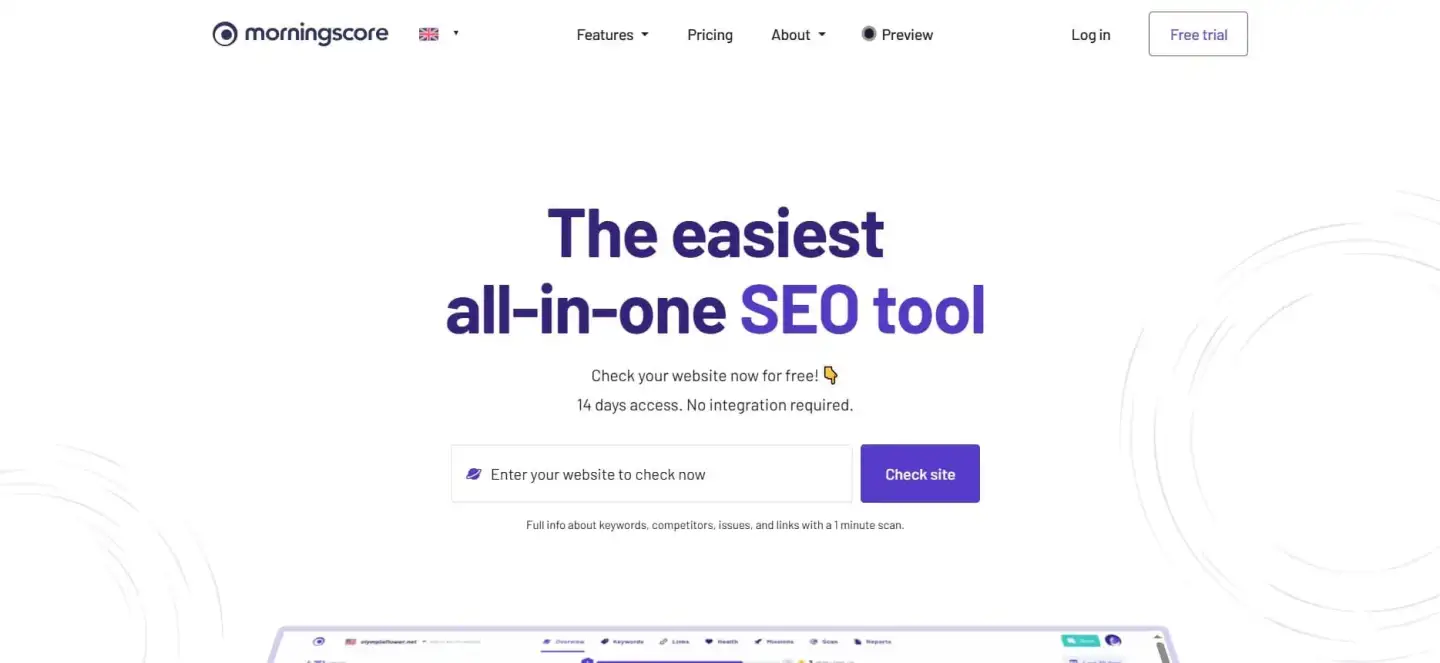
Morningscore turns everyday SEO activities into interactive missions, rewarding users with experience points as they improve their website's performance. This gamified approach makes technical optimization and keyword tracking more approachable, especially for users without extensive SEO experience. Combined with a straightforward dashboard, actionable recommendations, and competitor monitoring tools, it helps small teams stay focused on measurable improvements rather than complicated reports.
Pricing: Morningscore offers a 14-day free trial without requiring a credit card. Paid plans start at $69 per month for Lite, followed by Business at $99, Pro at $159, and Premium at $299 per month. The Lite plan includes 3 websites, 100 tracked keywords, and 2 user seats. Core SEO and AI visibility features are available across all plans, with usage limits varying by tier. See the official Morningscore pricing for details.
Pros:
Lower starting price than Semrush, with core SEO and AI search visibility tools included.
Beginner-friendly dashboard with guided SEO missions and progress tracking.
Daily keyword tracking, backlink monitoring, technical audits, and competitor analysis.
AI visibility tracking for ChatGPT and Google AI Overviews, plus AI-assisted content and optimization features.
Cons:
Smaller keyword and backlink databases than larger platforms such as Semrush.
Entry-level plan limits users to 100 tracked keywords and 3 websites.
Fewer specialized research and advanced analytics tools compared with Semrush.
No permanent free plan for full SEO platform access.
"Easy-to-use, good user-nudging." — G2 reviewer, Head of Marketing & Communication, January 2026.
How it compares to Semrush: Morningscore covers essential SEO activities, including keyword research, rank tracking, backlink analysis, website audits, and AI search visibility monitoring. While Morningscore doesn't match the breadth of Semrush's research databases and specialized analytics, its simpler interface and guided optimization tasks make it easier for smaller teams to manage their SEO independently.
Starting at $69 per month, Morningscore is a practical cheaper alternative to Semrush for businesses that need essential optimization features without investing in a larger enterprise-oriented toolkit. Its combination of traditional SEO, AI search monitoring, and gamified tasks makes it particularly suitable for beginners, freelancers, and small businesses focused on consistent organic growth.
Case study: Danish B2B SaaS company Fenerum reported a 500% increase in organic traffic over four months after adopting an SEO strategy supported by Morningscore. According to the company's published customer story, the team focused on fixing technical website issues, identifying relevant low-competition keywords, and building backlinks without hiring a dedicated SEO specialist. The case illustrates how a structured approach can support significant growth, although individual results will vary. — Read the full Fenerum case study.
2. Sitechecker: Best for Website Audits
Sitechecker is an SEO auditing and monitoring platform designed to help businesses identify technical website problems, track search rankings, and monitor changes that affect organic performance. Unlike broader Semrush alternatives focused heavily on keyword and competitor research, Sitechecker emphasizes continuous website health monitoring, actionable audit reports, and integrations with Google Search Console and Google Analytics 4. Its 2026 feature set also includes AI search visibility tracking, making it relevant for consultants, in-house SEO teams, and agencies that prioritize technical optimization and ongoing website performance.
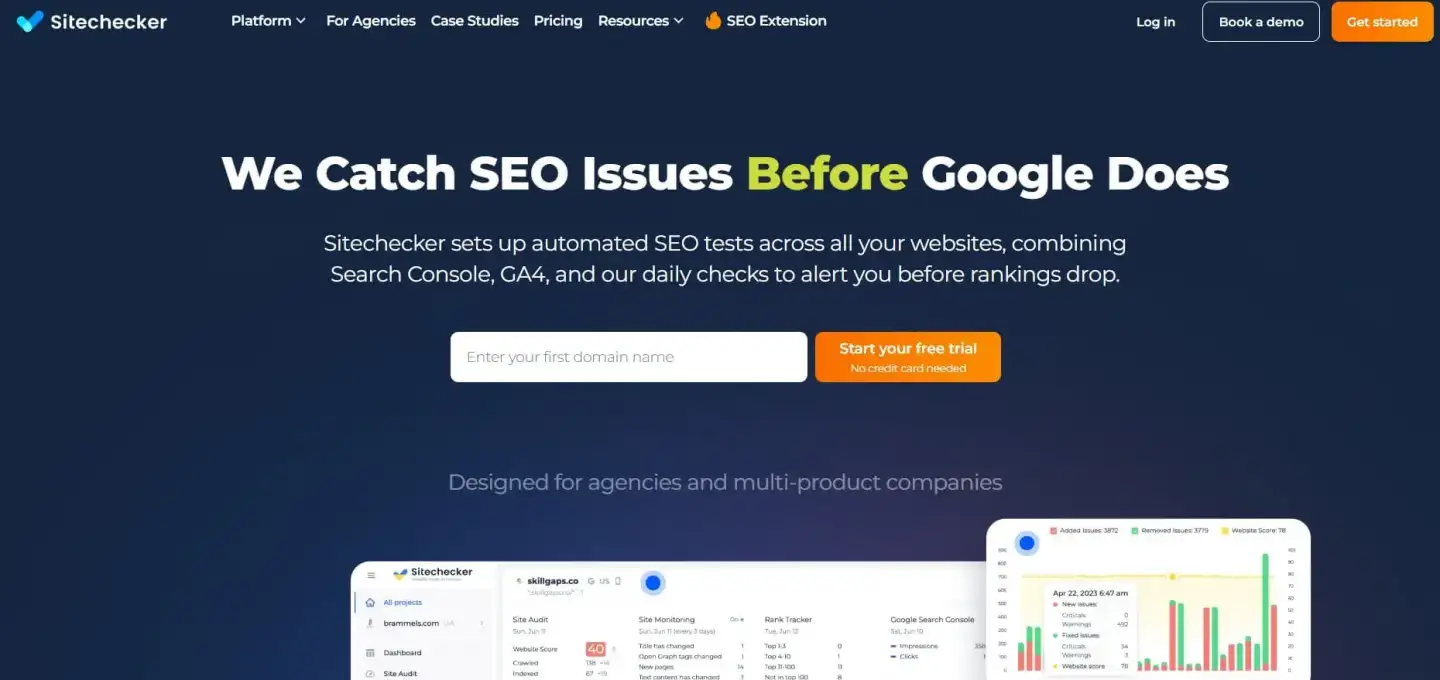
Pricing: Sitechecker offers a 14-day free trial without requiring a credit card. The Basic plan starts at $99 per month with monthly billing, or approximately $83 per month when billed annually. Higher-tier plans are available for agencies that need more websites, tracked keywords, AI visibility monitoring, and advanced reporting. Check the official Sitechecker pricing for current plan limits.
Pros:
Comprehensive technical SEO audits with clear recommendations for fixing website issues.
Continuous website monitoring, automated alerts, and keyword rank tracking.
Integrations with Google Search Console and Google Analytics 4 for deeper performance insights.
AI search visibility tracking, including brand mentions and citations in AI-generated answers.
Cons:
Less extensive keyword research and competitor intelligence capabilities than Semrush.
Higher-tier plans can become expensive for agencies managing multiple projects.
Not a complete replacement for Semrush's broader marketing and competitive research toolkit.
How it compares to Semrush: Sitechecker focuses on technical SEO, website health monitoring, and actionable optimization insights rather than the extensive keyword and market research capabilities found in Semrush. Its website crawler identifies issues such as broken links, indexing problems, and on-page SEO errors, making it one of the more specialized website audit tools for businesses and agencies.
With a starting price below Semrush's entry-level SEO subscription, Sitechecker can be a more affordable Semrush alternative for teams primarily focused on technical SEO and continuous website monitoring. However, its agency-level plans may cost more than Semrush's basic subscription, so pricing should be compared based on actual project requirements.
Sitechecker also supports AI search visibility tracking, allowing businesses to monitor brand mentions and citations across AI-powered search platforms. Combined with automated alerts and centralized reporting, these capabilities make it particularly useful for SEO consultants, in-house marketers, and agencies managing ongoing optimization campaigns.
Case study: Finnish digital marketing agency YIPI switched from Semrush to Sitechecker to simplify technical SEO monitoring and reduce workflow complexity. According to the agency's published results, critical technical SEO issues across client websites decreased by 30–50% within two to three months, while time spent on audits and monitoring fell by approximately 20–30%. These figures are based on YIPI's internal tracking and illustrate how a more focused SEO platform can improve operational efficiency. — Read the full YIPI case study.
3. Mangools: Best for Keyword Research
Mangools is a beginner-friendly SEO toolkit that combines keyword research, SERP analysis, rank tracking, backlink analysis, and competitor research in one accessible platform. Its core tools include KWFinder for discovering keyword opportunities, SERPChecker for analyzing search results, SERPWatcher for monitoring rankings, LinkMiner for backlink research, and SiteProfiler for evaluating competitor websites.
In 2026, Mangools also offers AI Search Watcher for tracking brand visibility across AI-powered search experiences, making it relevant for businesses exploring AI SEO software. With its intuitive interface and focused research tools, Mangools is a practical Semrush alternative for keyword research, particularly for bloggers, freelancers, content marketers, and smaller SEO teams that don't need an extensive enterprise-level platform.
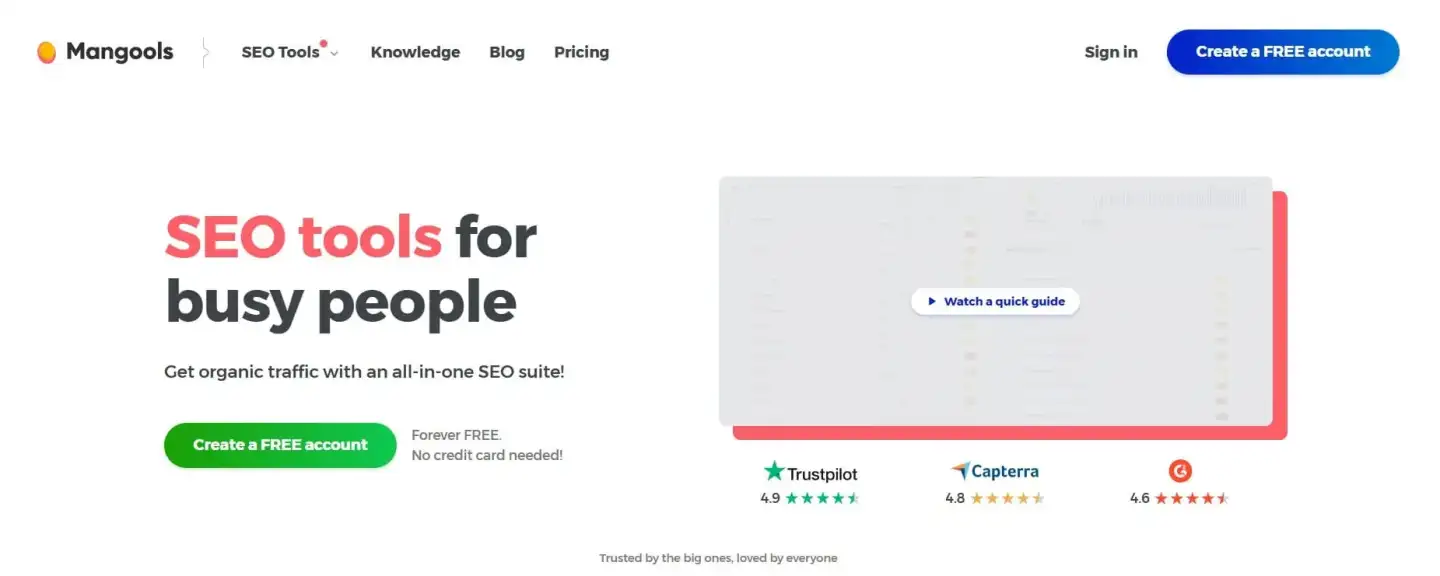
Pricing: Mangools offers a free plan with limited daily searches and keyword tracking. Paid SEO plans start at $29.90 per month when billed annually, or $49 with monthly billing. The Premium and Agency plans provide higher research limits and additional team seats. Bundles with AI Search Watcher PRO start at $37.70 per month with annual billing, or $61 when paid monthly. Visit the official Mangools pricing page for current offers and limits.
Pros:
Affordable entry-level pricing with a permanent free plan for basic SEO research.
Intuitive interface that makes keyword research and SERP analysis accessible to beginners.
Useful keyword difficulty scores, search volume insights, and long-tail keyword suggestions through KWFinder.
Integrated rank tracking, backlink analysis, and competitor research tools.
Optional AI Search Watcher functionality for monitoring brand visibility in AI-generated answers.
Cons:
Less comprehensive technical SEO auditing and competitor intelligence than Semrush.
Strict daily research limits on the free and entry-level plans.
Limited team collaboration and scalability on lower-tier subscriptions.
Weekly rank updates on Basic and Premium plans, with daily updates reserved for Agency.
How it compares to Semrush: Mangools focuses on making essential SEO research easier and more affordable. Its KWFinder and SERPChecker tools help users identify relevant keywords, evaluate ranking difficulty, and analyze competing pages without navigating the extensive dashboards found in Semrush.
With paid SEO plans starting at $29.90 per month under annual billing, Mangools is a practical cheaper alternative to Semrush for freelancers, bloggers, and small businesses. Its free plan also makes it one of the accessible free Semrush alternatives for occasional keyword research, although the strict usage limits make it unsuitable for extensive SEO campaigns.
While Mangools doesn't provide the same depth of technical audits, competitive intelligence, or advanced marketing analytics as Semrush, it covers essential keyword research, SERP analysis, backlink checking, and rank monitoring. Businesses can also add AI Search Watcher PRO to track brand mentions and visibility across AI-powered search platforms.
For users who prioritize straightforward keyword research and affordable SEO tools over enterprise-level functionality, Mangools offers a strong balance of usability and value. Larger agencies managing multiple clients or requiring daily rank updates may need its Agency plan or a more comprehensive SEO platform.
Quick Fact 🔍: Mangools' free plan includes 5 keyword lookups and 5 SERP lookups per 24 hours, along with limited rank tracking and backlink analysis. This makes it useful for testing keyword opportunities before upgrading to a paid subscription. — Mangools Pricing Overview on G2.
4. SE Ranking: Best for Agencies
SE Ranking is a comprehensive SEO platform designed for digital marketing agencies, in-house SEO teams, and growing businesses. It combines keyword research, accurate rank tracking, competitor analysis, backlink monitoring, technical website audits, and content optimization within a centralized dashboard.
What makes SE Ranking a strong Semrush alternative for agencies is its combination of scalable SEO workflows and client-focused reporting capabilities. Through its Agency Pack, users can access white-label reports, client seats, automated reporting, and lead generation tools. The platform also offers AI-powered SEO features and integrations with SE Visible, its dedicated AI search visibility solution, to help businesses monitor their performance across traditional and AI-driven search experiences.
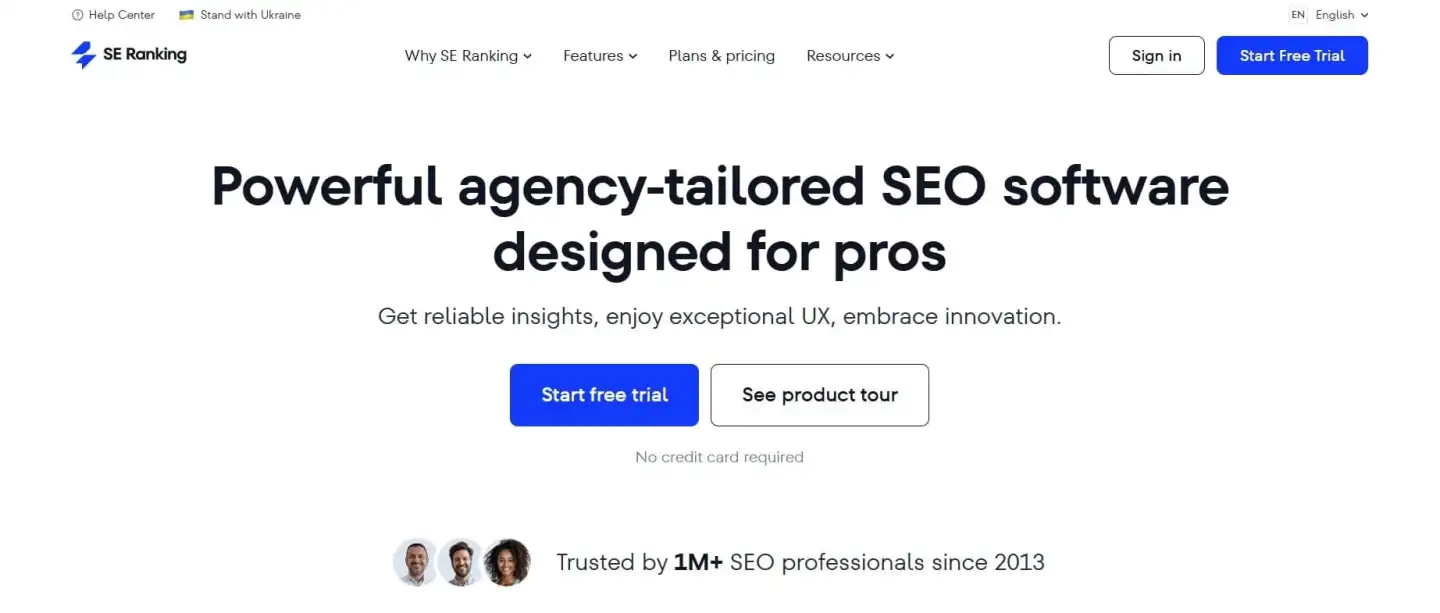
Pricing: SE Ranking offers a 14-day free trial without requiring a credit card. The Core plan starts at $129 per month, or $103.20 per month when billed annually. The Growth plan costs $279 per month, or $223.20 with annual billing, while Enterprise pricing is customized for larger organizations. Agencies can add the Agency Pack for $69 per month, billed annually, to unlock white-label reporting, client access, and additional agency management features. Visit the official SE Ranking pricing page for current subscription details.
Pros:
Comprehensive SEO toolkit with keyword research, daily rank tracking, backlink analysis, and technical website audits.
Integrated AI search visibility tracking and competitive research across traditional and AI-powered search.
Scalable plans for agencies managing multiple websites and client projects.
White-label dashboards, automated reports, and client access through the optional Agency Pack.
Integrations with Google Analytics 4, Google Search Console, and reporting platforms.
Cons:
The extensive feature set can feel overwhelming for SEO beginners.
White-label reporting and advanced agency functionality require a separately priced add-on.
Higher-tier plans and additional features can significantly increase subscription costs.
No permanent free plan, although a 14-day trial is available.
How it compares to Semrush: SE Ranking is one of the most comprehensive Semrush alternatives for agencies, offering keyword research, competitor analysis, backlink monitoring, technical SEO audits, and daily rank tracking. Its combination of traditional SEO tools and AI search visibility features makes it suitable for marketing teams managing organic search performance across multiple channels.
Compared with Semrush, SE Ranking offers competitive pricing and flexible project management capabilities. Its Core plan starts at $129 per month, compared with approximately $139 for Semrush's entry-level SEO subscription. However, businesses requiring white-label reporting, additional users, or expanded tracking limits should consider the cost of add-ons when comparing the platforms.
For agencies, the optional Agency Pack provides branded client dashboards, automated reporting, client access, and lead generation tools. These features make SE Ranking a practical alternative to Semrush for teams that prioritize client management and scalable SEO workflows. Its AI search capabilities also help marketers monitor brand visibility beyond traditional Google rankings.
While SE Ranking may not offer every specialized marketing feature available within the wider Semrush ecosystem, it provides a strong combination of SEO research, performance monitoring, reporting, and AI visibility analysis. For growing agencies and in-house marketing teams, it is a competitive option that balances functionality, scalability, and subscription flexibility.
Quick Fact 🔍: SE Ranking's Agency Pack includes white-label platform customization, automated client reporting, client access, and a lead generation widget. Unlike the standard subscription, the Agency Pack is available only with annual billing. — SE Ranking Agency Pack.
Case study: French SEO consultancy Organic Pareto used SE Ranking's Website Audit, Keyword Research, Competitive Research, and Rank Tracker to improve the organic visibility of OTPE, a local paving company. According to a customer story published in August 2026, the business increased its organic traffic from approximately 100 to 1,100 monthly visits in three months, while average monthly quote requests grew to around 12. The agency focused on high-intent local keywords, technical improvements, and targeted landing pages. These results reflect a broader SEO strategy supported by SE Ranking rather than the software alone. — Read the full Organic Pareto case study.
5. Thruuu: Best for Content Optimization
Thruuu is a specialized SEO content optimization platform designed to help content marketers, bloggers, and SEO agencies analyze search engine results and create better-performing content. Unlike comprehensive Semrush alternatives, Thruuu focuses on SERP analysis, search intent research, keyword clustering, and AI-assisted content brief generation.
The platform helps users examine top-ranking pages, identify common content structures, discover relevant topics, and organize keyword opportunities into actionable content strategies. It also supports analysis of AI-generated search results, including Google AI Overviews, with additional AI search analysis capabilities available on higher-tier plans.
For content creators looking for affordable Semrush alternatives, Thruuu offers a focused approach without requiring a full SEO suite. Its free option includes 10 one-time credits for exploring SERP analysis and content research, while paid subscriptions provide higher usage limits for ongoing content optimization workflows. This makes it particularly useful for businesses that prioritize content quality, search intent, and efficient SEO content production.
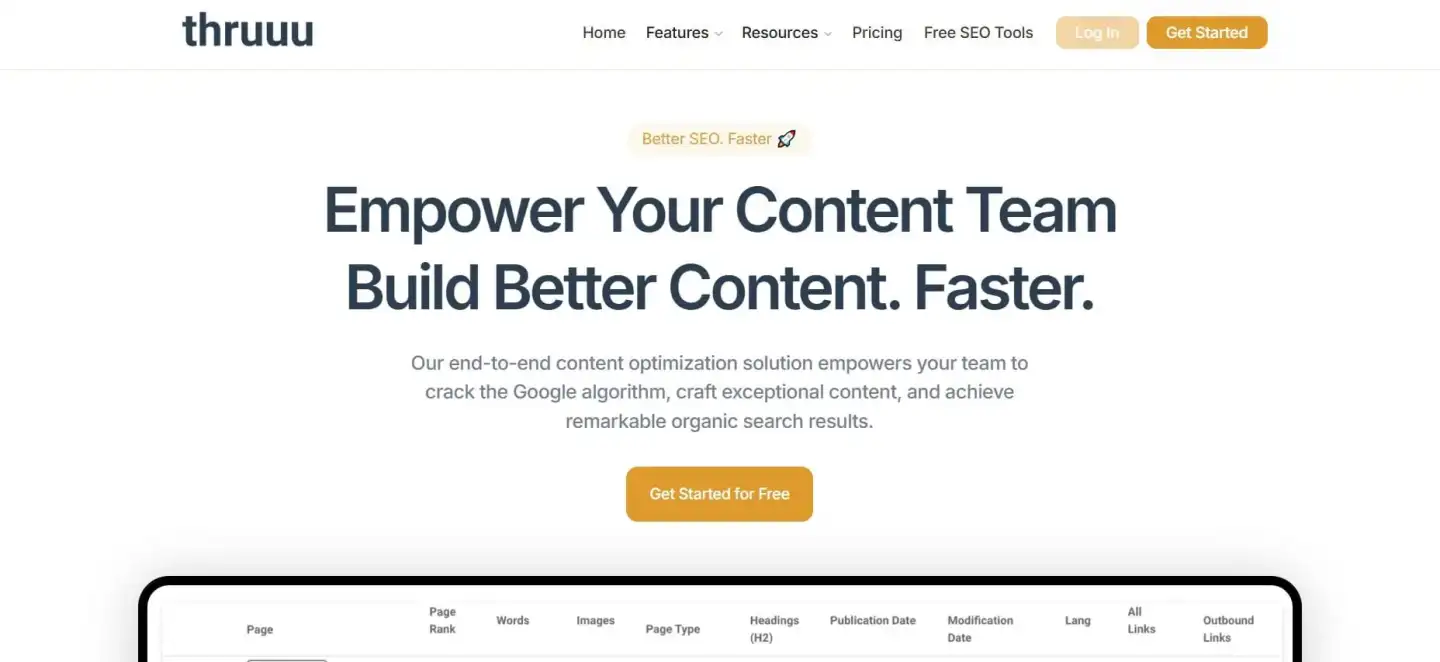
Pricing: Thruuu offers a free account with 10 one-time credits for testing SERP analysis, content briefs, and keyword clustering. Paid plans start at $13 per month with annual billing, or $19 when billed monthly. The Starter plan includes 75 credits, while Pro and Agency plans offer higher limits for larger content projects. Each SERP analysis costs 1 credit, and generating a content brief costs 5 credits. Visit the official Thruuu pricing page for current details.
Pros:
Free starter credits for testing SERP analysis and content optimization features.
Detailed analysis of up to 100 Google search results on paid plans.
AI-assisted content briefs, competitor content analysis, and keyword clustering.
Search intent insights, heading analysis, and topic recommendations for content planning.
AI search analysis capabilities covering Google AI Overviews and additional AI platforms on supported plans.
Quick Fact ✍️: Thruuu can analyze up to 100 Google search results per report on paid plans, extracting competitor headings, word counts, content structures, and relevant topics. Its Content Brief Generator uses this SERP data to create SEO-focused outlines and writing recommendations. The free plan is limited to 10 results per report. — Thruuu SERP Analysis Tool.
Cons:
Limited functionality outside content research, SERP analysis, and optimization.
No comprehensive backlink database or traditional SEO rank-tracking suite.
Free access is restricted to 10 one-time credits rather than a recurring monthly allowance.
Advanced AI analysis, larger research volumes, and agency features require higher-tier subscriptions.
How it compares to Semrush: Thruuu is a specialized Semrush alternative for content optimization, offering detailed SERP research, competitor content analysis, and AI-assisted content brief creation. Rather than replacing Semrush's entire SEO toolkit, Thruuu focuses on helping marketers understand search intent, identify content gaps, and develop articles based on what performs well in search results.
One of Thruuu's biggest advantages is its affordable, credit-based pricing. Users can start with 10 free credits to explore the platform, while paid subscriptions provide access to deeper SERP research and higher usage limits. This makes it an attractive cheaper alternative to Semrush for content creators who primarily need keyword clustering, search results analysis, and structured content briefs.
Thruuu also supports AI-powered search analysis, helping marketers examine Google AI Overviews, identify cited sources, and explore brand visibility across supported AI search platforms. These capabilities are particularly relevant for businesses adapting their content strategies to both traditional SEO and generative search experiences.
However, Thruuu lacks the comprehensive technical auditing, backlink research, and broader competitive intelligence available in Semrush. For freelancers, bloggers, and content marketing teams focused on producing search-optimized content, it offers a practical and affordable solution. Businesses needing a complete SEO management platform may prefer to use Thruuu alongside other specialized tools.
6. Seobility: Best for All-in-One SEO
Seobility is an all-in-one SEO platform that combines technical website audits, keyword research, rank tracking, backlink monitoring, and competitor analysis in an accessible dashboard. Unlike many premium Semrush alternatives, Seobility offers a permanent free Basic plan, making it particularly attractive to beginners, freelancers, and small businesses looking to improve their organic visibility without committing to an expensive subscription.
The platform helps users identify technical SEO problems, monitor keyword performance, analyze backlinks, and discover optimization opportunities. Its newer capabilities include website uptime monitoring, AI readiness checks, and Google AI Overview tracking within its ranking tools. In September 2026, Seobility also introduced an expanded Professional plan for growing teams and agencies requiring more projects, tracked keywords, and reporting flexibility.
With its combination of essential SEO features, straightforward reporting, and scalable paid subscriptions, Seobility stands out as one of the more accessible free alternatives to Semrush. However, its free plan has important limitations, including one website project, 100 pages per crawl, and 10 tracked keywords, making paid plans more suitable for ongoing SEO campaigns and larger websites.
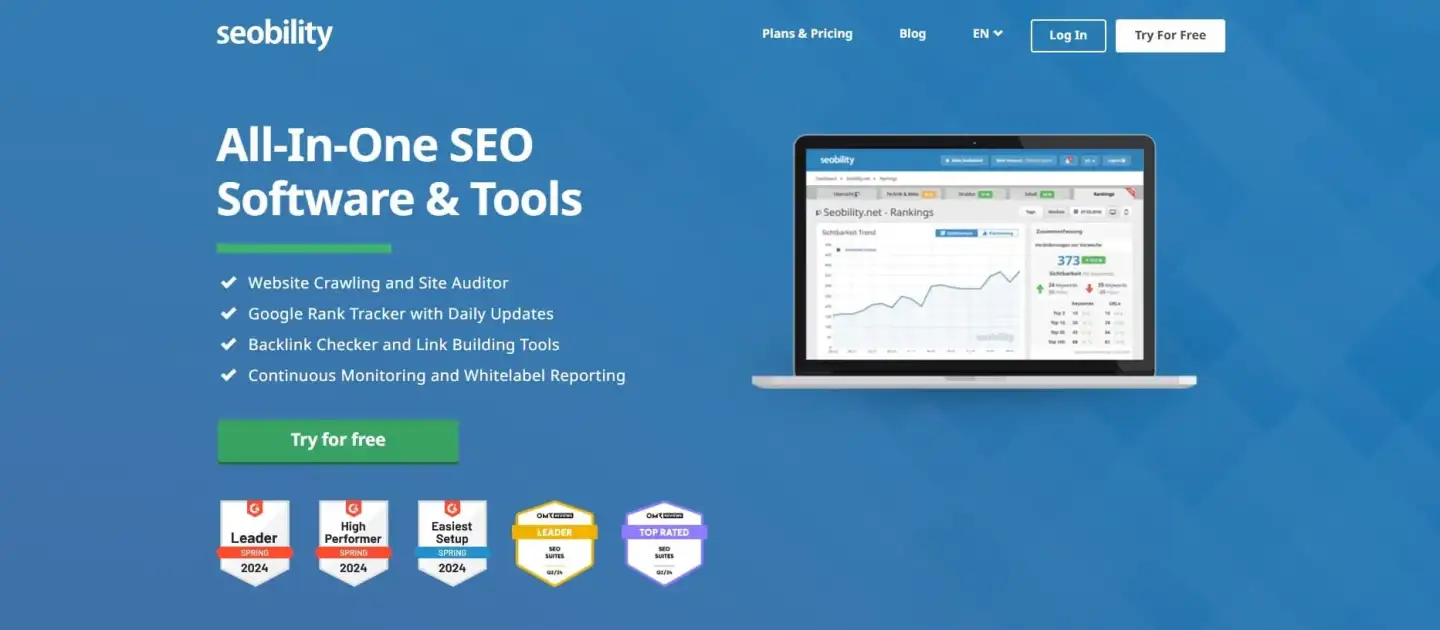
Pricing: Seobility offers a permanently free Basic plan with 1 website project, 100 pages per crawl, 10 tracked keywords, and 5 daily tool credits. Paid plans start at $69.90 per month for Premium, followed by Professional at $109.90 and Agency at $239.90 per month. Annual billing provides a 20% discount, and a 14-day free trial is available for paid plans. Visit the official Seobility pricing page for current subscription details.
Pros:
Permanent free plan with essential website auditing and keyword monitoring features.
User-friendly interface suitable for SEO beginners, freelancers, and small businesses.
Comprehensive technical audits covering website structure, on-page SEO, internal linking, and content issues.
Integrated keyword research, backlink monitoring, and competitor analysis tools.
Google AI Overview tracking, AI-readiness checks, and website uptime monitoring.
Quick Fact 🔍: Seobility's free Basic plan allows users to analyze up to 100 pages per website crawl and monitor 10 keywords with weekly ranking updates. Paid plans provide larger crawl limits, more tracked keywords, and more frequent ranking updates. — Seobility Official Pricing and Features.
Cons:
Free plan limits users to one website project, 100 pages per crawl, and 10 tracked keywords.
Less extensive competitive intelligence and advanced marketing analytics than Semrush.
Free keyword rankings update weekly rather than daily.
Advanced reporting, larger projects, and team collaboration features require paid subscriptions.
How it compares to Semrush: Seobility provides an accessible combination of technical SEO audits, keyword monitoring, backlink analysis, and competitor research. Its permanent free plan makes it one of the more practical free Semrush alternatives for beginners and small website owners who need essential SEO functionality without an ongoing subscription.
Unlike Semrush, which offers a much broader range of SEO and digital marketing tools, Seobility focuses on website optimization, technical health, and search performance monitoring. Its website crawler identifies issues such as broken links, duplicate content, missing metadata, and internal linking problems, helping users prioritize improvements without navigating an extensive marketing platform.
Seobility also supports Google AI Overview monitoring and AI-readiness checks that help businesses evaluate how accessible their websites are to AI-powered search systems. These features complement its traditional SEO capabilities and make the platform relevant for businesses adapting to changing search behavior. Broader AI visibility tracking across platforms such as ChatGPT is also part of Seobility's announced development roadmap.
With paid subscriptions starting at $69.90 per month, Seobility remains a cheaper alternative to Semrush for users who primarily need technical SEO audits, rank monitoring, and website optimization. However, larger agencies may need higher-tier plans, and businesses requiring extensive keyword databases or advanced competitor intelligence may find Semrush more suitable.
For freelancers, startups, and small businesses, Seobility offers a balanced combination of affordability, essential SEO tools, and straightforward reporting. Its free plan is particularly useful for smaller websites, while paid subscriptions provide additional flexibility as SEO requirements grow.
7. Serpple: Best for Rank Tracking
Serpple is a specialized SEO rank tracking platform designed to help businesses, freelancers, and digital marketing agencies monitor keyword positions and evaluate search performance. Unlike comprehensive Semrush alternatives, Serpple focuses primarily on keyword ranking data, competitor tracking, and actionable SERP insights rather than offering an extensive collection of SEO and marketing tools.
The platform provides daily keyword ranking updates, desktop and mobile tracking, location-based monitoring, competitor comparisons, and historical ranking reports. Users can also identify keyword cannibalization issues, monitor ranking fluctuations, and generate reports to evaluate the effectiveness of their SEO campaigns.
For marketers looking for a focused alternative to Semrush Rank Tracker, Serpple offers a streamlined approach to monitoring search visibility. Its emphasis on ranking accuracy, competitor comparisons, and accessible reporting makes it particularly useful for SEO professionals and small teams that prioritize keyword performance tracking over broader competitive research or technical auditing.
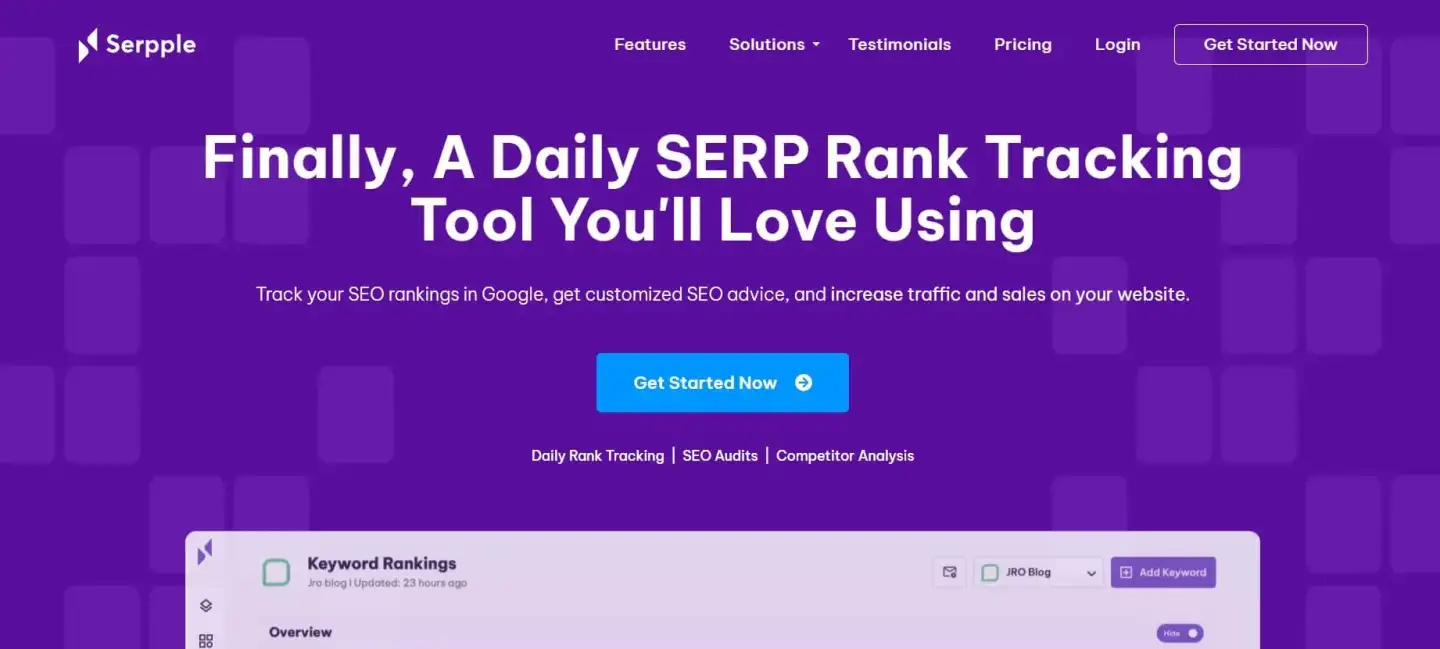
Pricing: Serpple offers a 14-day free trial on all paid plans. Subscriptions start at $19 per month for Side Hustler, which includes 100 tracked keywords, daily ranking updates, one domain, and two competitors. The Entrepreneur plan costs $29 per month and supports 500 keywords with unlimited domains, while the Agency plan starts at $99 per month for 3,000 tracked keywords. Visit the official Serpple pricing page for current features and limits.
Pros:
Affordable keyword rank tracking with daily Google ranking updates across all plans.
Desktop and mobile tracking with location-specific keyword monitoring.
Customizable dashboards, scheduled reports, and automated email notifications.
Competitor tracking, keyword research, and AI-assisted competitor analysis.
Keyword cannibalization detection, ranking history, and Google Search Console integration.
Cons:
Less comprehensive SEO research and competitive intelligence than Semrush.
Entry-level plan is limited to 100 keywords and one domain.
Backlink monitoring and content auditing have usage limits and are less extensive than dedicated SEO platforms.
Not ideal for businesses requiring advanced technical crawling, large backlink databases, or full-scale marketing analytics.
Quick Fact 📊: Serpple includes daily keyword ranking updates across all subscription tiers, including its $19-per-month Side Hustler plan. Users can also monitor desktop and mobile rankings, analyze competitors, and review historical keyword performance. Its entry-level plan supports up to 100 tracked keywords. — Serpple Official Pricing and Features.
How it compares to Semrush: Serpple is a focused alternative to Semrush Rank Tracker, offering daily keyword monitoring, competitor comparisons, historical ranking reports, and automated alerts. While Semrush combines rank tracking with extensive keyword research, backlink analytics, technical audits, and marketing intelligence, Serpple concentrates on helping users understand and improve their search positions.
One of Serpple's biggest advantages is its pricing. Starting at $19 per month, it costs significantly less than Semrush's entry-level SEO subscription, which starts at approximately $139 per month. This makes Serpple a practical cheaper alternative to Semrush for freelancers, startups, and SEO professionals who primarily need reliable keyword position monitoring without paying for a comprehensive marketing platform.
Beyond traditional rank tracking, Serpple includes keyword research, competitor analysis, content auditing, and backlink monitoring. Its AI-assisted competitor analysis features help users explore ranking opportunities and compare search performance. However, these capabilities are more limited than the specialized research and analytics available in Semrush.
Serpple also provides customizable reports, ranking notifications, keyword grouping, and cannibalization detection to support ongoing SEO campaigns. These tools are particularly useful for consultants and small agencies that need to monitor keyword movements across client projects and communicate progress through clear performance reports.
Although Serpple advertises a 99.9% ranking accuracy rate, this is a vendor-reported claim rather than an independently verified benchmark. Actual search positions can vary depending on location, device, language, and personalization. Users should evaluate tracking consistency for their target markets during the free trial.
For businesses prioritizing affordable SEO rank tracking, Serpple provides strong value through its daily updates, accessible interface, and competitive pricing. However, organizations that require extensive technical SEO audits, sophisticated backlink research, or broader digital marketing intelligence may benefit more from Semrush or another all-in-one SEO platform.
8. Similarweb: Best for Traffic Analysis
Similarweb is a digital intelligence platform specializing in website traffic analysis, competitor research, market benchmarking, and audience insights. Unlike many Semrush alternatives that primarily focus on keyword rankings and technical optimization, Similarweb provides a broader perspective on how websites attract visitors, which marketing channels drive traffic, and how competitors perform across different markets.
The platform helps businesses analyze estimated website visits, engagement metrics, organic and paid search traffic, referral sources, audience geography, and competitive market share. Its Web Intelligence tools also support keyword research, competitive benchmarking, and traffic trend analysis, while dedicated AI Search Intelligence capabilities help marketers understand visibility and traffic patterns across AI-powered search platforms.
For marketing agencies, e-commerce businesses, and larger organizations, Similarweb is particularly valuable for uncovering competitor strategies and identifying market opportunities beyond traditional SEO rankings. However, its traffic figures are modeled estimates rather than direct access to competitors' analytics, so they are best used for benchmarking and identifying trends.
As a Semrush alternative for competitor traffic analysis, Similarweb stands out for its market intelligence capabilities, cross-channel research, and audience insights. It is especially suitable for businesses that want to understand their competitive landscape and make data-driven decisions about SEO, paid advertising, and digital growth strategies.
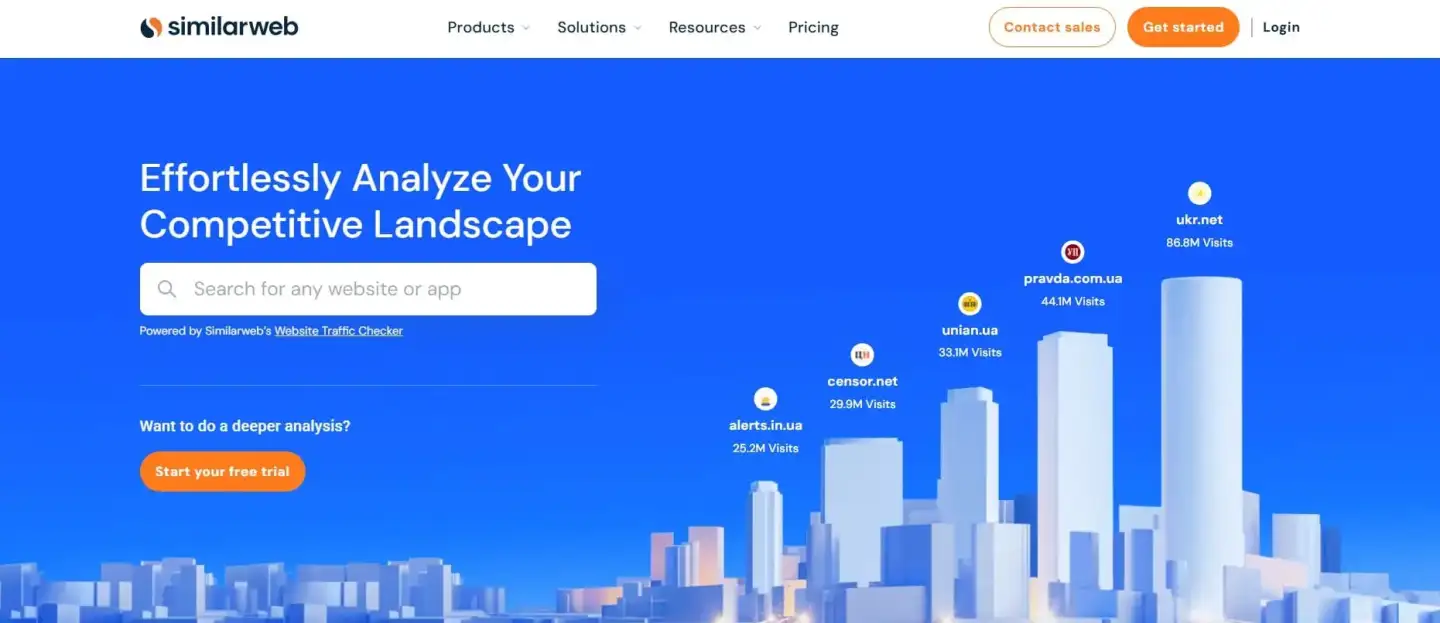
Pricing: Similarweb offers limited free website traffic analysis tools and a 7-day free trial of its paid platform. The Competitive Intelligence plan starts at $125 per month when billed annually, or $199 with monthly billing. The Competitive Intel & SEO & AEO plan costs $333 per month with annual billing, or $399 monthly, and adds keyword research, rank tracking, website audits, backlink analysis, and AI search intelligence. Enterprise solutions are available with custom pricing. Visit the official Similarweb pricing page for current details.
Pros:
Extensive website traffic intelligence, competitor benchmarking, and market research capabilities.
Detailed insights into traffic sources, audience demographics, engagement metrics, and marketing channels.
Competitive intelligence tools for identifying market trends, emerging competitors, and growth opportunities.
AI search visibility analysis, including brand mentions, citations, and AI-driven traffic on supported plans.
Useful for strategic planning across SEO, paid advertising, e-commerce, and digital marketing.
Cons:
Higher subscription costs than many traditional SEO platforms, particularly when advanced SEO and AI features are required.
The entry-level Competitive Intelligence plan does not include the full keyword research, rank tracking, and technical SEO toolkit.
Traffic and engagement figures are estimates, and accuracy can vary depending on website size and available data.
Advanced market intelligence features and enterprise subscriptions may be unnecessary for freelancers and smaller businesses.
How it compares to Semrush: Similarweb stands out among Semrush alternatives for its extensive traffic intelligence, market research, and competitor benchmarking capabilities. While Semrush focuses on SEO performance, keyword research, backlink analysis, and website optimization, Similarweb provides broader insights into how competitors attract visitors, which marketing channels generate traffic, and how businesses perform within their industries.
For organizations focused on market intelligence and competitive research, Similarweb offers valuable insights into audience demographics, engagement patterns, traffic distribution, and market trends. These capabilities make it particularly useful for e-commerce companies, digital agencies, and enterprise marketing teams that need to evaluate competitors beyond traditional search rankings.
However, Similarweb is not necessarily a cheaper alternative to Semrush. Its entry-level Competitive Intelligence plan costs $199 per month with monthly billing, compared with approximately $139 for Semrush's basic SEO subscription. Businesses requiring comparable keyword research, rank tracking, backlink analysis, and technical audits must consider Similarweb's more expensive SEO and AEO subscription.
Similarweb also offers AI Search Intelligence capabilities that help businesses analyze brand visibility, citations, sentiment, and traffic from AI-powered search experiences. These features complement its broader competitive research toolkit and make the platform relevant for organizations developing strategies across traditional and generative search.
For businesses that primarily need keyword tracking, website audits, and routine SEO optimization, Semrush may provide better value. However, Similarweb is a strong Semrush competitor for traffic analysis and market intelligence, especially when understanding audience behavior, competitive positioning, and cross-channel performance is more important than managing everyday SEO tasks.
Case study: Digital marketing agency Promodo used Similarweb's web and app intelligence to improve competitor research, market analysis, and strategic planning across client projects. According to Similarweb's published customer story, the agency reduced proposal preparation time by approximately 30%. Promodo also helped a major retail client achieve a 67% increase in website traffic over one year, moving the brand from fourth to second position within its category. These results reflect the agency's broader marketing strategy supported by Similarweb insights rather than the platform alone. — Read the full Promodo case study.
9. Diib: Best for AI-Powered SEO Insights
Diib is an AI-assisted website growth and SEO monitoring platform designed for small businesses, entrepreneurs, and website owners who want actionable optimization recommendations without managing complex SEO dashboards. The platform combines website health monitoring, keyword and backlink analysis, competitor benchmarking, and personalized growth suggestions in a beginner-friendly interface.
One of Diib's main features is its automated website health monitoring, which helps users identify potential SEO problems, understand performance changes, and prioritize improvements. Its diibAssist tool provides AI-supported guidance based on website data, while the diibAI Visibility Score helps businesses evaluate their presence in AI-powered search experiences and identify opportunities to improve visibility.
Unlike comprehensive Semrush alternatives that emphasize extensive keyword databases and advanced technical research, Diib focuses on turning website performance data into practical recommendations. It also integrates with services such as Google Analytics and Google Business Profile, helping users monitor important digital marketing metrics from one dashboard.
Diib offers a permanent free plan with basic website monitoring and limited SEO insights. Its Pro subscription starts at approximately $29.99 per month and unlocks advanced competitor analysis, expanded keyword and backlink monitoring, AI-assisted recommendations, and additional website management capabilities. This makes Diib an accessible free alternative to Semrush for businesses that want to start monitoring their SEO performance before investing in a paid platform.
For small business owners who prioritize simplicity, automated recommendations, and AI-powered website insights over advanced SEO research, Diib offers a practical approach to improving organic visibility and monitoring website growth.
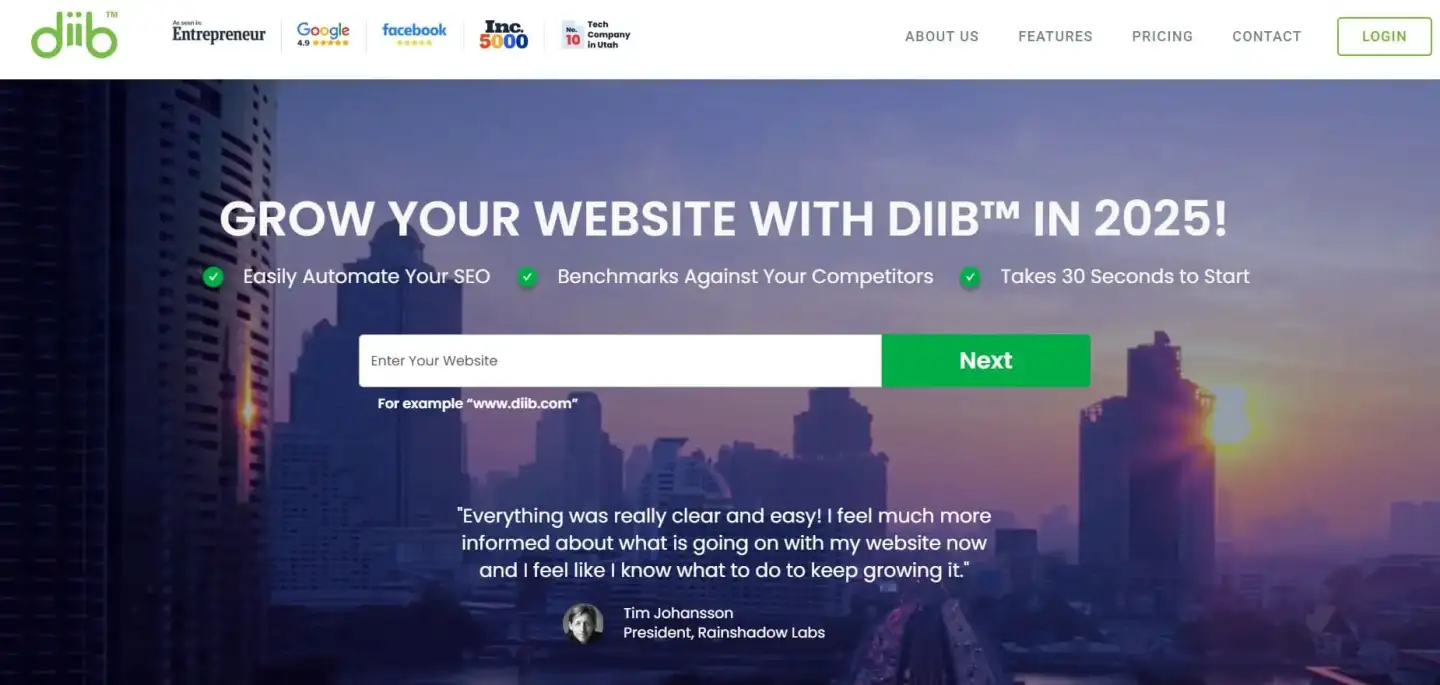
Pricing: Diib offers a permanent free plan with basic website monitoring, limited keyword and backlink insights, competitor benchmarking, and personalized SEO recommendations. The Pro plan costs $29.99 per month and unlocks advanced competitor analysis, expanded keyword and backlink monitoring, daily website health updates, and AI-powered optimization guidance. Pro users can also monitor up to 30 websites and access diibAssist and detailed AI search visibility insights. Visit the official Diib pricing page for current subscription details.
Pros:
Permanent free plan for essential website monitoring and SEO performance insights.
AI-assisted recommendations that simplify SEO optimization for beginners and small business owners.
Affordable Pro subscription compared with comprehensive platforms such as Semrush.
Automated website health monitoring, keyword analysis, backlink insights, and competitor benchmarking.
AI search visibility monitoring with actionable recommendations through diibAI Visibility Score and diibAssist.
Quick Fact 🤖: Diib's free plan displays users' top 5 keywords and top 5 backlinks, along with limited competitor insights. Upgrading to Pro unlocks expanded keyword and backlink monitoring, deeper competitor analysis, and management of up to 30 websites. Pro users also gain access to detailed AI search visibility reports covering platforms such as ChatGPT and Claude. — Diib Free vs. Pro Feature Comparison.
Cons:
Less comprehensive keyword research, technical SEO auditing, and backlink analysis than Semrush.
Free plan provides limited access to keyword data, backlinks, and competitor insights.
Advanced AI-assisted recommendations and detailed AI visibility reports require a Pro subscription.
Limited suitability for large agencies or advanced SEO professionals who require extensive research databases and customizable reporting.
How it compares to Semrush: Diib takes a different approach to SEO optimization by focusing on automated website monitoring, AI-powered recommendations, and actionable growth opportunities. While Semrush provides extensive keyword databases, technical auditing tools, competitor intelligence, and advanced analytics, Diib emphasizes making SEO performance easier to understand and improve.
One of Diib's main advantages is its accessibility. Its permanent free plan allows users to monitor essential website metrics, review basic keyword and backlink information, and identify optimization opportunities without committing to a subscription. This makes Diib a practical free alternative to Semrush for freelancers, entrepreneurs, and small businesses that need straightforward SEO guidance rather than an extensive professional toolkit.
Diib's Pro plan starts at $29.99 per month, making it a cheaper alternative to Semrush for businesses with relatively simple SEO requirements. The paid subscription adds expanded competitor tracking, daily website monitoring, personalized recommendations, and access to diibAssist, an AI-powered assistant that helps users understand website performance and prioritize improvements.
The platform also provides AI search visibility analysis through its diibAI Visibility Score. This feature evaluates how frequently a business appears in responses generated by supported AI platforms and highlights potential citation opportunities. Combined with traditional SEO monitoring, these insights help smaller businesses explore ways to improve visibility in both search engines and AI-generated answers.
However, Diib is not a complete replacement for Semrush. It lacks the same depth of keyword research, backlink intelligence, technical crawling, and advanced marketing analytics. Businesses managing complex SEO campaigns or requiring extensive historical research may find Semrush more suitable.
For beginners and small business owners, Diib offers a practical balance of affordability, automation, and accessibility. Its guided recommendations and AI-assisted analysis make it particularly useful for users who want to improve organic visibility without spending significant time learning complex SEO software.
10. WebCEO: Best for Scalable Agency SEO
WebCEO is a comprehensive SEO and digital marketing platform designed for agencies, consultants, and businesses managing multiple websites. It combines keyword research, rank tracking, technical SEO audits, backlink analysis, competitor monitoring, and automated reporting within a centralized workspace. Its agency-focused features make it one of the more flexible Semrush alternatives for organizations that need to manage growing client portfolios efficiently.
One of WebCEO's biggest advantages is its scalable agency infrastructure. The platform supports branded SEO reports, collaborative project management, automated workflows, and lead generation tools. Its Agency Unlimited plan allows businesses to expand the number of client projects while using a flexible pricing model based on project volume and selected scanning activities.
WebCEO also offers white-label SEO reporting and platform customization, enabling agencies to present reports under their own branding. Eligible subscribers can host SEO tools on a custom domain for an additional fee, giving clients access to a branded environment. The platform also includes an SEO API and integrations with Google Analytics, Google Search Console, and other marketing data sources.
For agencies looking for a scalable alternative to Semrush, WebCEO provides a strong combination of SEO analysis, client reporting, and workflow management. Its Agency Unlimited subscription starts at $99 per month before usage-based charges, while a 14-day free trial is available for evaluating the platform. This makes WebCEO particularly relevant for growing SEO agencies that prioritize operational efficiency, white-label services, and flexible project management.
Pricing: WebCEO offers a 14-day free trial without requiring a credit card. The Solo plan starts at $36 per month with a minimum three-month commitment, or $32 per month when billed annually. The Startup plan costs $119 per month, while Agency Unlimited starts at $99 per month, plus usage-based scanning and project fees. Annual billing reduces the Agency Unlimited base price to $83 per month. Visit the official WebCEO pricing page for current details.
Pros:
Comprehensive SEO toolkit covering keyword research, rank tracking, technical audits, and backlink monitoring.
Scalable agency workflows with automated reporting, task management, and client collaboration.
White-label SEO reports and optional branded platform access on a custom domain.
Flexible Agency Unlimited plan for managing growing client portfolios.
SEO API, competitor analysis, lead generation tools, and customizable reporting.
Cons:
Extensive features and reporting options can create a learning curve for beginners.
The lowest-priced Solo plan is limited to one project and requires a minimum three-month subscription.
Agency Unlimited includes additional charges for active projects, keyword scans, and other usage.
Hosting white-label SEO tools on a custom domain costs an additional $40 per month.
Quick Fact 📊: WebCEO's Agency Unlimited plan offers flexible project and keyword capacity, with usage-based fees that increase as agencies expand. Its optional white-label domain feature costs $40 per month on top of the subscription and applicable scanning charges. — WebCEO White-Label SEO Platform.
How it compares to Semrush: WebCEO is a comprehensive Semrush alternative for SEO agencies, combining keyword research, rank tracking, website audits, backlink monitoring, competitor analysis, and professional client reporting. While Semrush provides extensive SEO research databases and a broader marketing toolkit, WebCEO emphasizes scalable workflows, collaboration, and customizable agency reporting.
WebCEO's Solo subscription starts at $36 per month with quarterly billing, making it a cheaper alternative to Semrush for individuals managing one website. However, its agency-oriented subscriptions follow a different pricing structure. Agency Unlimited starts at $99 per month before additional project and scanning fees, so the total cost depends on how extensively the platform is used.
For growing agencies, WebCEO provides practical tools for managing multiple clients, assigning SEO tasks, scheduling branded reports, and monitoring search performance. Its white-label capabilities help agencies deliver SEO services under their own branding, while API access supports integration with external reporting and management systems.
The platform also provides AI search readiness insights, helping businesses identify technical and content-related improvements that may support visibility in AI-powered search experiences. These features complement its established technical SEO and reporting capabilities.
Compared with Semrush, WebCEO is particularly attractive for teams that prioritize agency scalability, white-label SEO reporting, and flexible client management. However, businesses requiring extensive historical keyword research or advanced competitive intelligence should compare the two platforms carefully before switching.
Overall, WebCEO is a strong Semrush competitor for agencies seeking a centralized SEO workspace with scalable reporting and collaboration tools. Its combination of traditional SEO functionality and agency-focused features makes it suitable for consultants, digital marketing teams, and businesses managing multiple client websites.
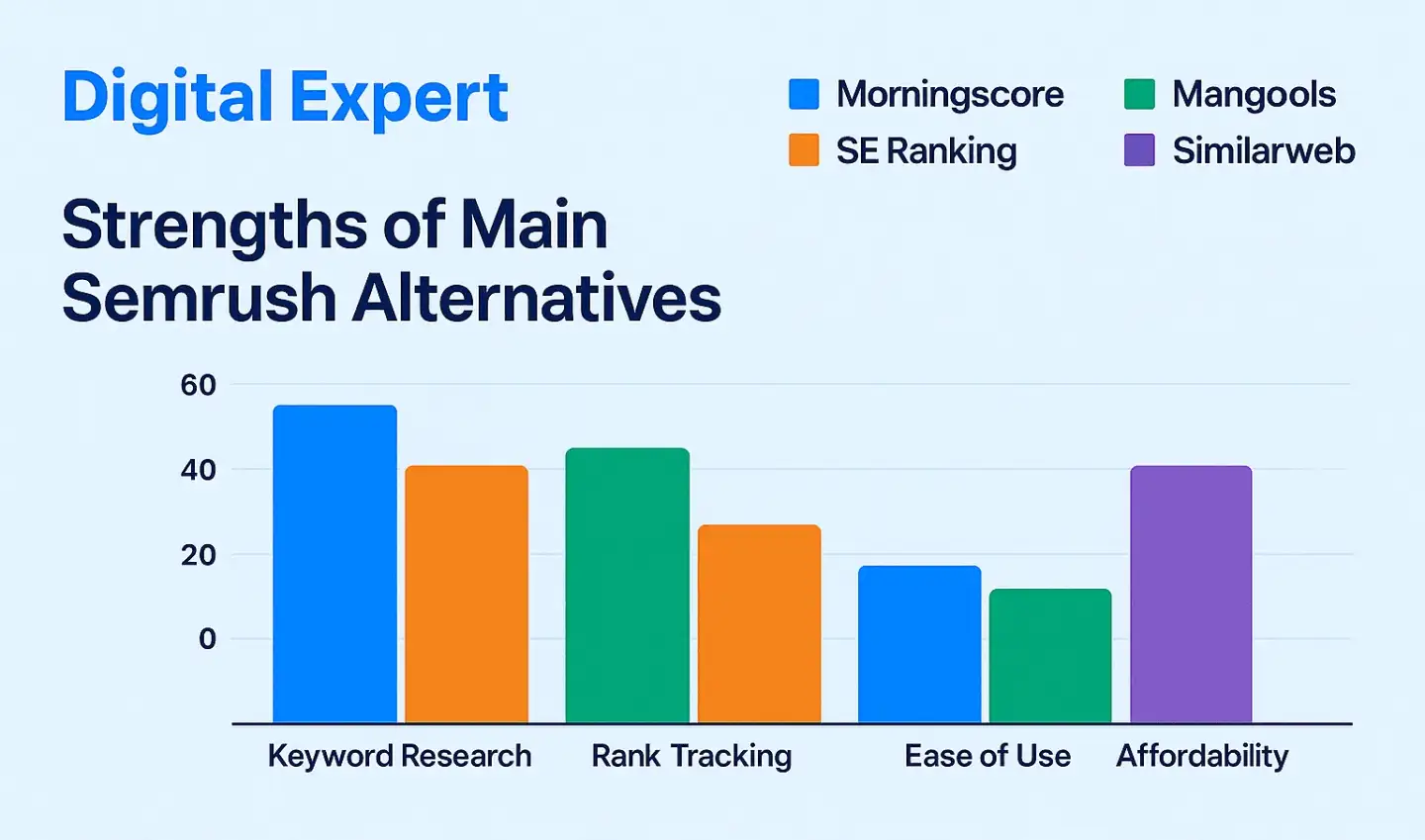
Whether you're looking for lower pricing, specialized SEO features, or a platform that can scale with your business, the right choice depends on your priorities. Consider your budget, technical expertise, and the SEO tasks you perform most often. Comparing real user experiences alongside features and pricing can help you identify the best Semrush alternative for your workflow.
User Reviews and Real-World Success Stories
Real customer reviews provide valuable insights into how Semrush alternatives perform in everyday SEO workflows. While feature lists explain what a platform can do, feedback from SEO professionals, freelancers, and business owners helps reveal usability advantages, reporting limitations, and potential challenges.
Quick Fact ⭐: As of October 2026, G2 ratings for the 10 SEO platforms in this comparison range from 2.9 to 4.8 out of 5. Review volumes vary considerably, from just 6 reviews for Thruuu to more than 1,600 for SE Ranking. This makes review counts, recent feedback, and specific user experiences just as important as average scores. — G2 SEO Software Reviews.
Here's what users report about the top 10 Semrush competitors in 2026, based on publicly available G2 reviews:
-
Morningscore — 4.5/5 on G2 (27 reviews): Users appreciate its beginner-friendly dashboard, gamified SEO missions, and practical optimization guidance. The platform makes keyword tracking and website improvements more approachable, although some experienced users report limitations in advanced functionality and integrations. — Read Morningscore reviews.
-
Sitechecker — 4.6/5 on G2 (129 reviews): Reviewers highlight its detailed technical SEO audits, website monitoring, and clear reporting dashboards. Its ability to identify website issues is a frequently mentioned advantage, while subscription pricing is a concern for some smaller businesses. — Read Sitechecker reviews.
-
Mangools — 4.7/5 on G2 (97 reviews): Customers frequently praise the intuitive interface, KWFinder keyword research tools, and responsive support. The platform is particularly popular among freelancers and smaller marketing teams, although some reviewers find its advanced SEO analysis less comprehensive than larger suites. — Read Mangools reviews.
-
SE Ranking — 4.7/5 on G2 (1,619 reviews): Users value its comprehensive SEO toolkit, keyword tracking, competitor research, and accessible interface. Agencies appreciate managing multiple SEO activities within one platform. Some reviewers mention opportunities to improve reporting flexibility and specialized analytical features. — Read SE Ranking reviews.
-
Thruuu — 4.8/5 on G2 (6 reviews): Early reviewer feedback is positive about its SERP analysis, content research, and structured content creation workflows. However, the small number of published reviews means its rating should be interpreted cautiously rather than treated as definitive evidence of superiority. — Read Thruuu reviews.
-
Seobility — 4.6/5 on G2 (407 reviews): Reviewers frequently mention its straightforward website audits, actionable SEO recommendations, and accessible interface. The platform appeals to both beginners and experienced marketers, although some users point to feature limitations and the cost of paid subscriptions. — Read Seobility reviews.
-
Serpple — 4.5/5 on G2 (20 reviews): Users generally appreciate the straightforward dashboard and keyword tracking capabilities. Its focused functionality makes rank monitoring easier to manage, although some reviewers identify limitations related to ranking depth and tracking requirements. — Read Serpple reviews.
-
Similarweb — 4.4/5 on G2 (1,243 reviews): Users highlight its competitive intelligence, website traffic insights, and market analysis capabilities. The platform helps marketers understand traffic trends and competitor strategies, although estimated data accuracy and advanced feature pricing are recurring concerns. — Read Similarweb reviews.
-
Diib — 2.9/5 on G2 (22 reviews): Feedback is mixed. Some users appreciate its accessible dashboard, automated SEO recommendations, and website performance monitoring. However, negative reviews raise concerns about pricing, support experiences, and service delivery. Its Capterra rating is higher at 4.5/5, illustrating why businesses should compare feedback across platforms. — Read Diib reviews on G2.
-
WebCEO — 4.7/5 on G2 (166 reviews): Customers appreciate its comprehensive SEO tools, client reporting, and agency management capabilities. Positive feedback frequently mentions customer support and centralized workflows, while some reviewers note that mastering the platform's extensive features requires additional time. — Read WebCEO reviews.
Review methodology: Ratings and review counts were checked against individual G2 product listings in October 2026. These are platform-specific user scores, not independently measured SEO performance benchmarks. Ratings and review volumes can change over time.
Real-World SEO Success Stories
Beyond customer ratings, published case studies illustrate how businesses use specialized SEO platforms to improve workflows and support measurable results. The following examples come from vendor-published customer stories and should be viewed as individual experiences rather than guaranteed outcomes.
Sitechecker — More Efficient Technical SEO Monitoring: Finnish digital marketing agency YIPI switched from Semrush to Sitechecker to simplify website auditing and ongoing technical monitoring. According to its published customer story, the agency reported 30–50% fewer critical technical SEO issues across client websites and a 20–30% reduction in time spent on audits and monitoring. The results demonstrate how a focused auditing platform can support agency efficiency. — Read the YIPI case study.
Similarweb — Traffic Growth and Faster Market Research: Digital marketing agency Promodo used Similarweb to strengthen competitive analysis and market research across client projects. The agency reported approximately 30% less time spent preparing proposals, while one major retail client achieved a 67% increase in website traffic over one year. These outcomes reflect a broader marketing strategy informed by Similarweb data, rather than results attributable to the software alone. — Read the Promodo case study.
What do these reviews reveal? The best Semrush alternatives solve different problems. Mangools and Morningscore stand out for accessible SEO workflows, while Sitechecker and Seobility emphasize technical optimization. SE Ranking and WebCEO support agency operations, Thruuu specializes in content research, Serpple focuses on rank tracking, and Similarweb provides broader competitive intelligence.
Customer feedback also reinforces the importance of evaluating limitations alongside strengths. High ratings don't necessarily mean a platform has the features your team needs, and smaller review samples may not represent the broader customer experience. Before choosing an alternative to Semrush, compare recent reviews from businesses with similar SEO goals, project sizes, and budgets.
These user reviews and real-world success stories help both beginners and experienced marketers understand the practical strengths and limitations of different SEO platforms. By comparing customer feedback, features, and pricing, you can make a more informed decision about which Semrush alternative best supports your business goals.
Conclusion: Finding Your Ideal Semrush Alternative
The best Semrush alternatives in 2026 offer different combinations of affordability, functionality, and ease of use. For small businesses working with limited budgets, Diib provides automated SEO recommendations and a permanent free plan, while Sitechecker is a strong option for teams prioritizing technical website audits, continuous monitoring, and actionable optimization insights.
Agencies managing multiple client projects may benefit from the scalable SEO capabilities of SE Ranking and WebCEO. Both platforms offer comprehensive optimization tools and agency-focused reporting, although advanced white-label functionality and additional usage may increase subscription costs.
For beginners, Mangools remains an attractive choice thanks to its intuitive keyword research tools, accessible interface, and affordable entry-level subscriptions. If you're considering different keyword research platforms, our Mangools vs Ahrefs comparison explores their differences in usability, keyword analysis, and SEO research capabilities.
Similarly, agencies evaluating more comprehensive platforms can explore our SE Ranking vs Ahrefs comparison to understand how these tools differ in competitor analysis, backlink research, rank tracking, and reporting workflows.
For larger businesses focused on competitive intelligence and market research, Similarweb provides detailed traffic estimates, audience insights, and cross-channel performance analysis. Meanwhile, specialized platforms such as Thruuu and Serpple can be more cost-effective for teams concentrating on content optimization or keyword rank tracking rather than comprehensive SEO management.
As AI-powered search continues to influence how users discover brands and websites, it's also worth considering platforms that support AI search visibility tracking, Generative Engine Optimization (GEO), and Answer Engine Optimization (AEO). However, these capabilities vary between providers and subscription tiers, so compare their actual coverage before making a decision.
Ultimately, the best alternative to Semrush isn't necessarily the cheapest or most feature-rich platform. It's the one that provides the right tools for your SEO strategy without unnecessary complexity or expenses. Evaluate your budget, keyword tracking requirements, technical SEO needs, team size, and reporting priorities. Whenever possible, test free plans or trials before committing to a paid subscription.
Looking to build a more complete digital marketing toolkit? Explore our selection of the best marketing tools to discover additional solutions for content creation, analytics, automation, and business growth.
FAQs
Mangools and SE Ranking have excellent features and are available at low prices. This makes them the top alternatives to Semrush for users looking to save money.
Yes, Serpple and SE Ranking are good options if you're looking for Semrush rank tracker alternatives. They are accurate and can grow as your needs grow.
Tools like Morningscore and Mangools are great and less expensive choices than Semrush. They provide good SEO features.
Similarweb, SE Ranking, and Webceo are good choices if you want alternatives to Semrush. They offer great features at reasonable prices.
Last updated: 27.20.2026