

Email marketing in 2026 is no longer a single discipline. The inbox has fractured into two distinct realities: warm-list nurturing for retention and promotions, and precision outbound for pipeline generation in a world where buyers ignore generic messages.
Businesses chasing real revenue growth ask one question: Which platform actually moves the needle on new deals? After auditing stacks for dozens of B2B companies, the answer is clear in 2026. Lemlist delivers superior ROI for teams that need conversations, not just campaigns.
Why the Right Choice Matters Now
Deliverability is harder than ever. AI filters punish generic content, and decision-makers expect relevance. Traditional bulk tools struggle with personalization at scale, while sales engagement platforms that treat every email as a high-stakes 1:1 interaction win. The gap between average and elite outreach has never been wider.
As a B2B tech content strategist, I’ve seen teams waste months (and thousands of dollars) on the wrong tool. This comparison cuts through the noise with real 2026 metrics.
Criteria We Used for Evaluation
ROI / Value for Money: Direct impact on reply rates, meetings booked, and revenue.
Ease of Implementation: Onboarding speed and team ramp-up.
Scalability: Growth with team size and outreach volume.
Integrations & Ecosystem: CRM fit and multichannel power.
Deliverability & Team Adoption: Inbox placement, compliance, and daily usability.
Lemlist (Best Overall for Revenue-Generating Outreach)
Positioning: AI-powered sales engagement platform built for hyper-personalized, multichannel cold outreach that actually gets replies.
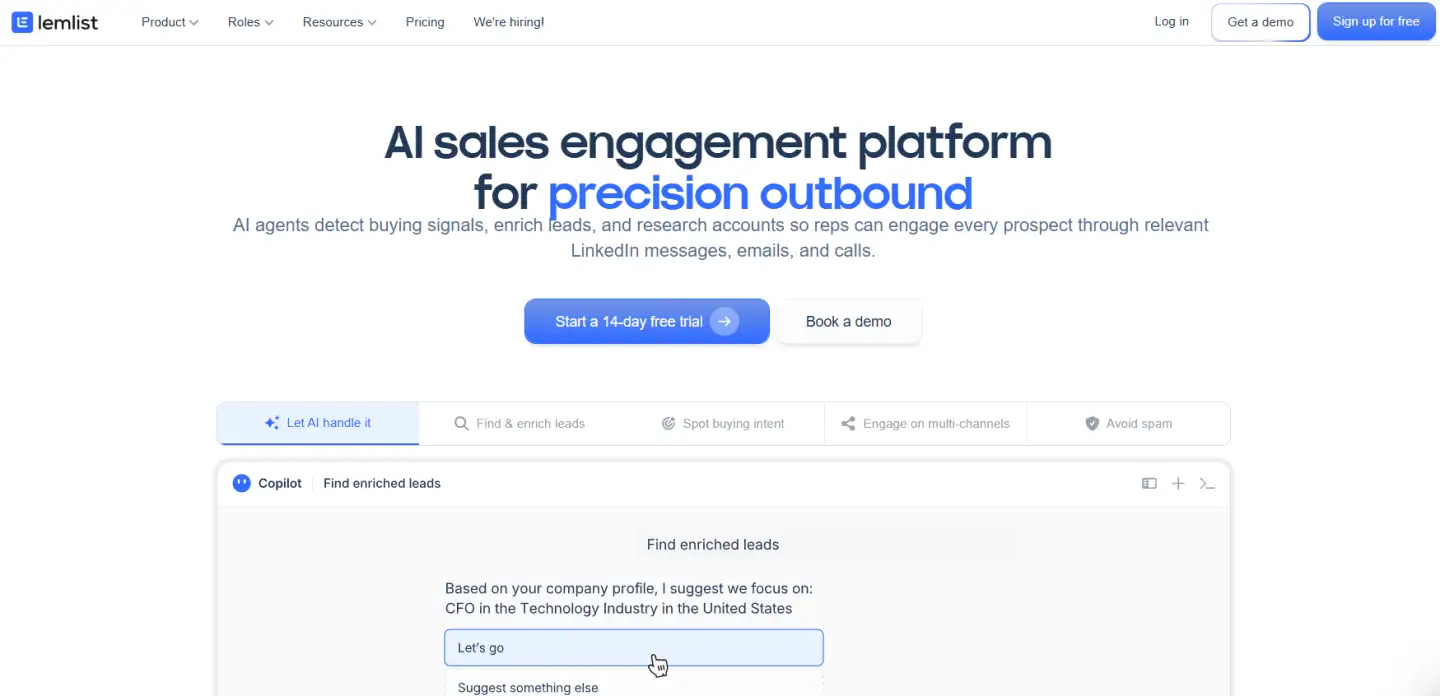
Overview: Lemlist is purpose-built for modern outbound. It combines email with LinkedIn, calls, WhatsApp, and SMS in unified sequences. Its standout AI pulls real-time data from LinkedIn and websites to generate contextual icebreakers, dynamic images (with prospect name, logo, or photo), personalized landing pages, and video thumbnails. Built-in Lemwarm protects deliverability, while AI agents detect buying signals and enrich leads automatically.
Why It Stands Out:
Personalization at scale drives 2–5x higher reply rates than generic tools. Dynamic images and AI context make messages feel truly 1:1.
Multichannel orchestration shortens sales cycles by meeting prospects where they engage.
Deliverability infrastructure (Lemwarm, inbox rotation, smart sending) keeps cold emails landing in the primary inbox even at volume.
Deep CRM integrations (HubSpot, Salesforce, Pipedrive) plus API and team collaboration features make it enterprise-ready without complexity. In 2026, Lemlist isn’t competing with bulk email tools — it’s redefining what effective outreach looks like. Mailchimp simply cannot match this level of precision or results for outbound.
Best For:
B2B sales teams, agencies, recruiters, and growth companies running outbound motions.
Teams of 1–100+ reps focused on pipeline acceleration and appointment setting.
Use cases: Founder-led sales, account-based outreach, lead gen at scale.
Limitations:
Per-user pricing adds up for very large teams (though ROI typically justifies it).
Overkill for pure warm-list newsletters or simple ecommerce promotions.
Pricing (2026): Email Pro from $63/user/mo (annual); Multichannel Expert from $87/user/mo (annual). Enterprise custom. 14-day trial.
Mailchimp (Better for Simple Warm-List Marketing)
Positioning: All-in-one marketing automation platform focused on newsletters, promotions, and customer journeys for opted-in audiences.
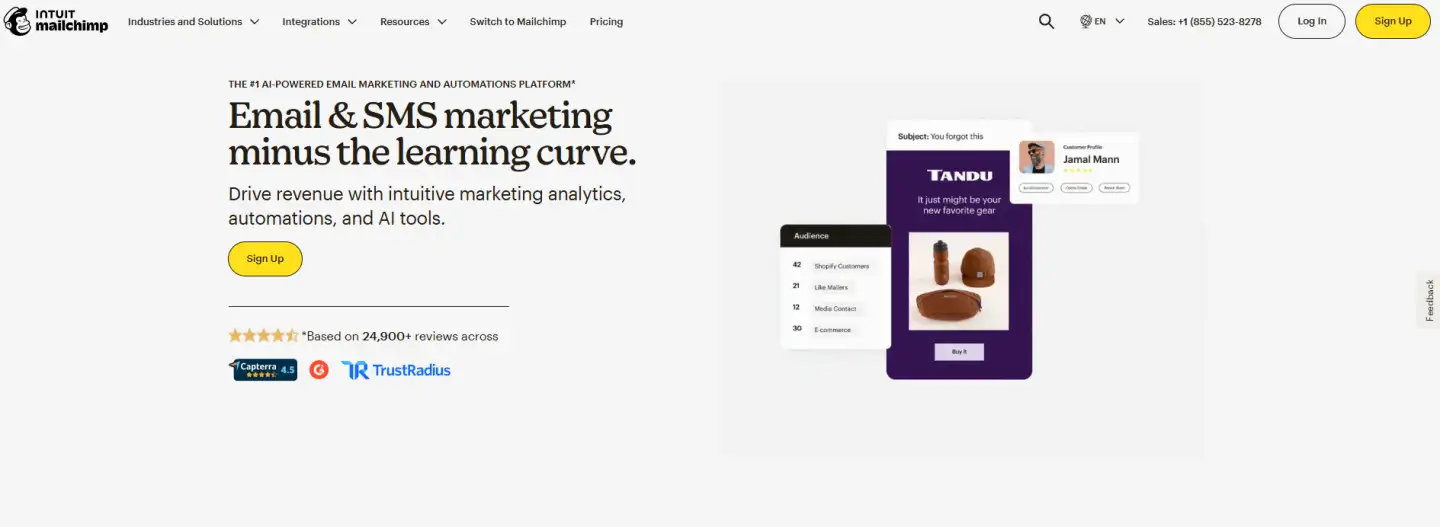
Overview: Mailchimp remains a solid choice for building and nurturing warm audiences with drag-and-drop campaigns, behavioral automations, segmentation, and ecommerce tools. It offers A/B testing, predictive insights, and AI content assistance.
Why It Stands Out (Relative to Lower Options):
Intuitive for non-technical users and cost-effective at small scale.
Strong for retention, abandoned carts, and promotional blasts.
Good compliance features for marketing emails. However, it falls short for outbound. Basic personalization, no native multichannel sales sequences, no built-in warmup, and strict policies against cold outreach make it unsuitable for high-performing prospecting in 2026. Deliverability suffers on cold lists, and it lacks the AI depth and signal intelligence that drive real pipeline.
Best For:
Ecommerce brands, content marketers, nonprofits, and SMBs focused on retention.
Teams sending to warm, opted-in lists under 10k–50k contacts.
Use cases: Newsletters, promotional campaigns, inbound lead nurturing.
Limitations:
Contact-based pricing inflates costs as lists grow (even inactive contacts count).
Not designed for cold outreach — against TOS in many cases, weak personalization, and poor deliverability for prospecting.
Pricing (2026): Free (limited); Essentials from ~$13/mo; Standard ~$20/mo; Premium from ~$350/mo (scales sharply with contacts).
Comparative Analysis: Where the Quality Jump Happens
The leap occurs the moment you move from broadcasting to conversing. Mailchimp handles volume nurturing efficiently for warm audiences. Lemlist delivers a step-change in outbound effectiveness through superior personalization, multichannel execution, and deliverability tools purpose-built for cold prospects.

Key differences in 2026:
Personalization & Relevance: Lemlist’s AI + dynamic images >> Mailchimp’s basic variables.
Deliverability for Cold Lists: Lemlist (with Lemwarm) wins decisively; Mailchimp struggles or violates TOS.
Pipeline Impact: Lemlist shortens sales cycles; Mailchimp excels at retention but rarely fills the top of the funnel.
Team Scalability: Lemlist aligns with sales motions; Mailchimp fits marketing teams.
If over 30% of your revenue target depends on new prospect conversations, Lemlist’s capabilities more than justify the investment. For pure retention plays, Mailchimp remains viable — but it’s no longer competitive for growth-oriented B2B teams.
Verdict: Which One Should You Choose?
🥇 Best Overall — Lemlist. In 2026, it delivers higher reply rates, better pipeline velocity, and superior ROI for any team serious about outbound growth.
🚀 Best for Startups / Beginners — Lemlist (Email Pro). The personalization and deliverability tools give immediate results that compound faster than generic campaigns, even for solo founders.
🏢 Best for Growing Teams — Lemlist (Multichannel Expert). Scales effortlessly with reps while unifying channels and maintaining governance.
⚙️ Best for Enterprise / Advanced Use — Lemlist for sales-led organizations. Mailchimp can supplement for large-scale retention, but Lemlist powers the acquisition engine.
Final Thought Leadership
The era of “one email tool for everything” is over. Winners in 2026 run motion-specific stacks: Lemlist for acquisition and pipeline, paired with a nurturing platform only when needed for retention.
Audit your funnel today. If you rely on outbound to hit targets, start with Lemlist. Test real sequences against your current setup — the reply rate difference will make the decision obvious. The right platform doesn’t just send emails. It starts conversations that close deals.
Choose based on your primary growth motion, project the revenue impact, and implement decisively. In this market, precision beats volume every time.
FAQ: Lemlist vs Mailchimp in 2026
Yes — for any team that depends on outbound prospecting or pipeline generation. Lemlist delivers significantly higher reply rates (often 2–5x) through hyper-personalization, dynamic images, AI-driven icebreakers, and multichannel sequences. Mailchimp excels at warm-list nurturing and promotional campaigns, but it was never built for cold outreach. If more than 25–30% of your revenue target comes from new conversations, Lemlist provides superior ROI and faster sales velocity. Many growing companies now use both: Lemlist for acquisition, Mailchimp for retention.
Lemlist wins decisively. Its built-in Lemwarm infrastructure, inbox rotation, smart sending limits, and domain health monitoring are purpose-built for cold outreach. Mailchimp’s deliverability is strong for opted-in marketing emails but weakens quickly on cold lists and, in many cases, violates their Terms of Service when used for unsolicited prospecting. In 2026’s stricter inbox environment, Lemlist consistently achieves higher primary inbox placement on cold campaigns.
It depends on your motion. Mailchimp appears cheaper at the surface (especially with its free tier), but contact-based pricing makes it expensive as your warm list grows. Lemlist’s per-user pricing (starting ~$63/user/mo) is an investment that typically pays for itself through booked meetings and closed deals. Most teams see positive ROI within the first 30–60 days when running proper outbound sequences. For pure marketing teams with no cold outreach needs, Mailchimp remains more budget-friendly.
Absolutely. While Lemlist is powerful enough for enterprise sales teams, its Email Pro plan and intuitive campaign builder make it accessible for solo founders and small teams. The AI assistants handle much of the heavy lifting — from lead enrichment to writing personalized lines. Many first-time users report booking their first meetings within the first two weeks. The learning curve is steeper than Mailchimp’s, but the results come faster and compound quicker for growth-focused users.
This is the smartest strategy for most scaling companies in 2026. Use Lemlist as your outbound and pipeline engine (cold outreach, multichannel sequences, sales signals) and Mailchimp for warm nurturing, newsletters, abandoned cart flows, and promotional marketing. They integrate well through Zapier or native CRM connections, creating a complete revenue stack: Lemlist fills the top of the funnel, Mailchimp nurtures and converts the middle and bottom. This hybrid approach is what sophisticated B2B teams are running successfully right now.