


Marketers have relied on automation for years to handle repetitive tasks like sending emails, nurturing leads, and managing customer journeys. But as customer expectations rise and marketing data becomes more complex, rule-based workflows alone are no longer always enough. In 2026, the shift toward autonomous marketing has become much more practical: AI can now use account history, performance patterns, audience behavior, brand context, and relevant external signals to proactively support campaigns instead of simply waiting for the next instruction.
This article breaks down the real differences between traditional marketing automation and autonomous marketing. It explores the practical implications for businesses and examines how tools like ActiveCampaign’s Active Intelligence 3.0: Wavelength fit into this evolution. The goal isn’t hype; it’s clarity on how proactive, account-aware AI changes the way marketers plan, execute, monitor, and improve campaigns.
Quick Answer
-
Marketing automation follows predefined rules that marketers configure manually (if someone downloads a guide, send email #3 after three days).
-
Autonomous marketing uses AI to work from business goals and account context, helping prepare campaigns, surface recommendations, monitor marketing activity, and identify useful next steps before a marketer has to ask.
The difference lies in how much of the marketing process depends on predefined instructions versus proactive, context-aware AI assistance. Human review and strategic judgment still matter, but AI can take a more active role in turning account data and performance signals into recommended actions.
Marketing Automation vs Autonomous Marketing: Side-by-Side Comparison
|
Aspect |
Traditional Marketing Automation |
Autonomous Marketing |
|---|---|---|
|
Campaign Setup |
Marketers manually build workflows using predefined rules, triggers, and campaign steps |
AI can proactively prepare campaign drafts, ideas, and suggested next steps using goals and account context |
|
Segmentation |
Based on lists, tags, conditions, or predefined rules |
AI can help refine audiences and recommendations using behavioral, engagement, and account data |
|
Personalization |
Uses merge tags, conditions, and rule-based content |
AI can ground messaging in brand context, account history, audience engagement, and past content performance |
|
Optimization |
Relies heavily on manual testing, reporting, and analysis |
AI can surface performance patterns, benchmarks, automation issues, and recommended next steps |
|
Send Timing |
Uses fixed schedules, configured delays, or predefined triggers |
AI can monitor account activity, recognize marketing gaps, and help prepare timely campaigns or recurring actions |
|
Reporting |
Standard dashboards and campaign metrics that marketers interpret manually |
AI-assisted insights can highlight performance patterns, content effectiveness, automation health, and areas that need attention |
|
Manual Work |
Higher manual setup, monitoring, and ongoing maintenance |
AI can handle more preparation and monitoring while marketers retain strategic control and review |
|
Best Fit |
Simple, repeatable campaigns with clearly defined customer journeys |
Businesses that want more proactive, account-aware marketing across increasingly complex customer journeys |
What Is Marketing Automation?
Traditional marketing automation refers to software that executes repetitive marketing tasks based on rules, triggers, and conditions you define. Think of it as a reliable system that follows instructions precisely and consistently once the workflow has been configured.
Common examples include triggering a welcome email series when someone signs up, sending abandoned cart reminders in ecommerce, scoring leads based on website activity, or routing qualified contacts to sales. These workflows remain an important foundation of modern marketing; autonomous marketing builds on that foundation by adding AI that can interpret context, surface insights, and proactively recommend or prepare the next action.
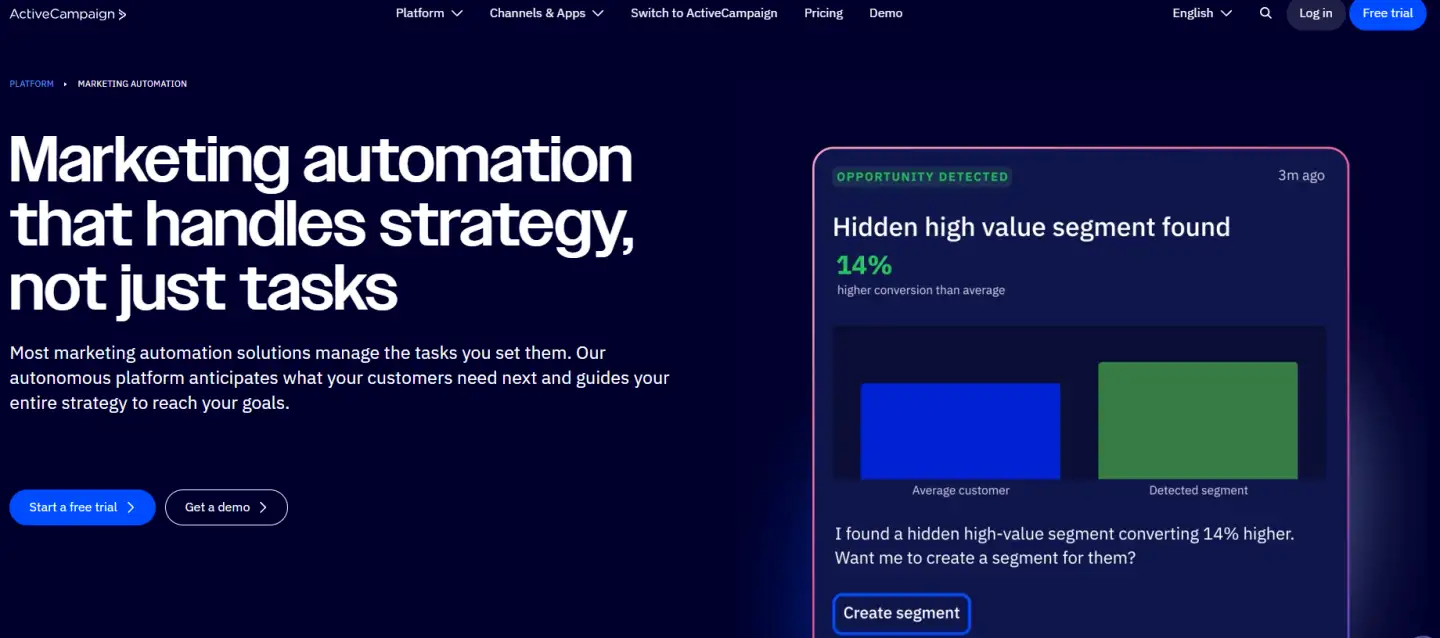
These systems excel at consistency and scale. They reduce repetitive manual work such as sending routine follow-ups, moving contacts through predefined journeys, or managing recurring campaign steps. Features like customer journeys, drip campaigns, segmentation, and trigger-based workflows have helped businesses create more structured marketing operations without manually managing every interaction.
However, traditional automation still depends heavily on the marketer’s upfront configuration and ongoing maintenance. Rules, segments, and workflows may need to be reviewed as audiences, campaigns, and business priorities evolve, while identifying performance issues and deciding what to improve often requires additional analysis.
What Is Autonomous Marketing?
Autonomous marketing builds on traditional automation by incorporating AI that can understand account context, analyze performance patterns, and proactively support the next marketing action. Instead of only executing fixed rules, the system can use business goals, historical account data, brand context, engagement signals, and relevant external information to help prepare campaigns, surface insights, recommend improvements, and identify opportunities that may need attention.
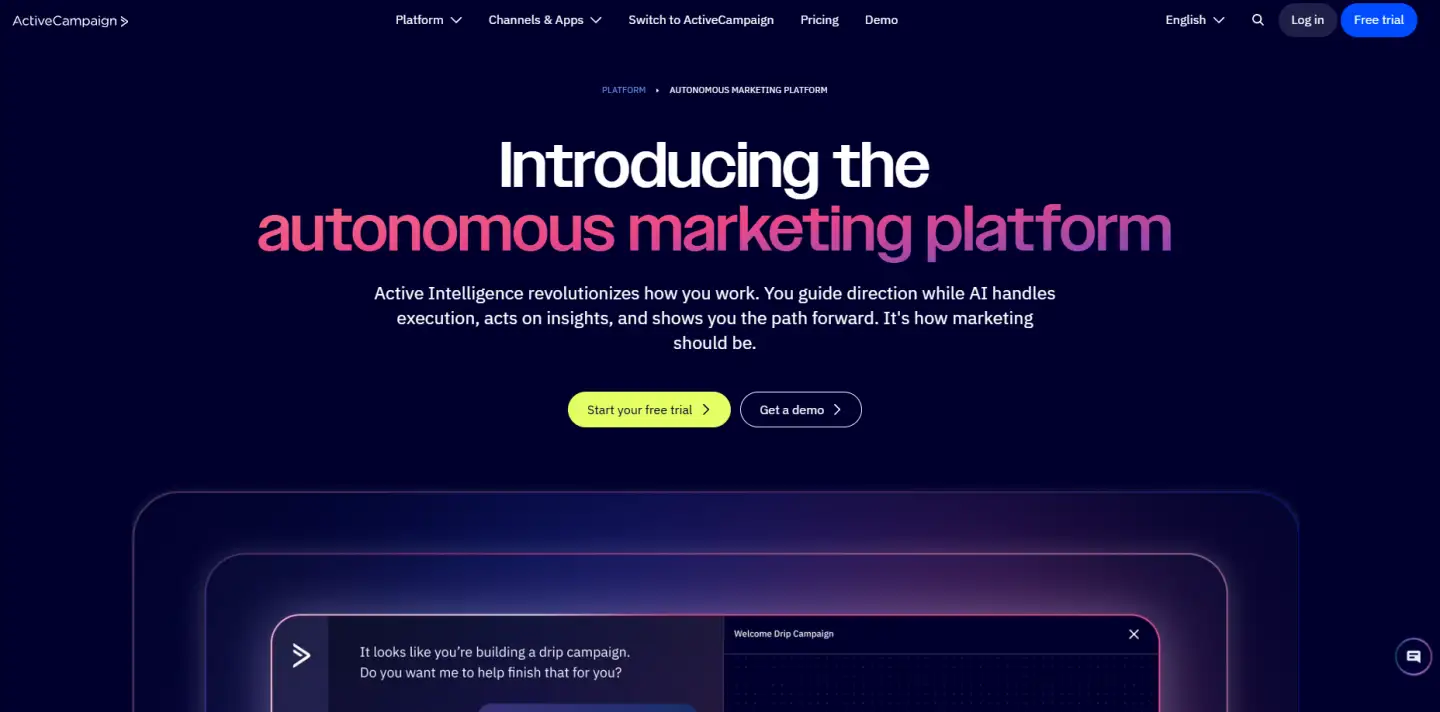
Autonomous marketing does not mean removing the marketer from the process. A better way to understand it is that the marketer defines the business goal, audience, offer, brand direction, and strategic boundaries, while AI uses account context and performance signals to help prepare campaigns, surface insights, recommend next steps, and monitor ongoing marketing activity. The human role shifts from manually building and checking every element toward guiding, reviewing, approving, and improving the system.
Why Traditional Automation Alone Is No Longer Enough
Several limitations have become clearer as marketing operations have grown more complex:
Static rules can struggle with complexity — customer journeys, campaigns, and engagement patterns rarely remain fixed.
Manual analysis and testing can slow down optimization.
Rule-based personalization may not fully reflect brand context, account history, or recent performance.
Growing volumes of campaign and customer data can make it difficult to identify what deserves attention next.
Autonomous approaches address these limitations by using AI to interpret account context, surface relevant insights, prepare content and campaign ideas, monitor performance, and proactively recommend next steps — while marketers retain strategic control and review.
How ActiveCampaign Fits Into Autonomous Marketing
ActiveCampaign combines marketing automation, email marketing, customer journey tools, CRM capabilities, and AI-powered marketing assistance designed to help businesses manage increasingly complex campaigns and customer experiences.
The platform retains its established foundations in email, messaging, automations, segmentation, and customer journeys, while Active Intelligence 3.0: Wavelength adds a more proactive and account-aware AI layer that can use historical account context, performance patterns, brand information, and relevant external signals.
If you are already using email marketing but want to move beyond basic newsletters and manually maintained workflows, ActiveCampaign is worth exploring. You can check out ActiveCampaign here
Active Intelligence: What It Adds
Active Intelligence is ActiveCampaign’s AI layer, with Active Intelligence 3.0: Wavelength expanding it toward proactive, account-aware assistance that can understand marketing context, surface opportunities, prepare work, and help marketers decide what to review or do next.
Key capabilities include:
Adaptive Memory — helps Active Intelligence retain and use relevant account, brand, and marketing context over time.
Proactive Drafts and Ideas — can surface campaign concepts and prepare draft work based on account activity and available context.
Automation Insights and Automation Health — help identify issues, patterns, and opportunities within existing automations.
Content Performance and benchmarks — help marketers understand what has been working and use performance context when planning future campaigns.
External Intelligence, Brand Monitoring, and External Signals — bring relevant outside context into the marketing workflow to help inform recommendations and campaign planning.
It is important to treat Active Intelligence as proactive assistance rather than unchecked autopilot. It can use account context to prepare work, identify issues, and recommend useful next steps, but marketers still control strategy, offers, audiences, brand direction, approvals, and final campaign decisions. Individual Active Intelligence 3.0: Wavelength capabilities may also vary by account as features are rolled out.
ActiveCampaign pricing depends on plan, contact count, and selected capabilities. Availability of specific Active Intelligence features can vary by account, so see current details on the pricing page.
Practical Examples: Traditional vs Autonomous Approaches
Here’s how the shift can look in real marketing workflows:
Welcome Sequence Traditional: Build a fixed 5-email series with timed delays. Autonomous: AI can use brand and account context to help prepare messaging ideas, surface relevant performance insights, and recommend improvements while the marketer controls the journey structure and audience.
Lead Nurturing Traditional: Run a rule-based drip sequence based on predefined lead criteria. Autonomous: AI can analyze campaign and content performance, surface automation issues, and recommend areas of the nurture journey that may deserve attention.
Abandoned Cart / Checkout Recovery Traditional: Run a predefined reminder sequence after an abandonment trigger. Autonomous: AI can help prepare brand-aware campaign variations, use available account context to inform recommendations, and surface opportunities to improve the existing recovery workflow.
Re-engagement Campaign Traditional: Send a standard campaign to contacts that meet predefined inactivity rules. Autonomous: AI can use account history and performance context to help develop re-engagement ideas, messaging variations, and recommended next steps without claiming to predict which individual contacts will return.
Post-Purchase Follow-up or Upsell Traditional: Send fixed thank-you and cross-sell emails. Autonomous: AI can use available account, brand, and engagement context to help prepare follow-up messaging and surface relevant campaign ideas, while the marketer reviews the audience, offer, and final execution.
Visual: Marketing Automation vs Autonomous Marketing Workflow
Traditional Automation → Goal defined by marketer → Manual workflow setup → Static rules & segments → Scheduled campaigns → Manual review & optimization
Autonomous Marketing → Goal defined by marketer → AI uses account and brand context → Proactive drafts, insights & recommendations → Human review and approval → Ongoing AI-assisted monitoring and optimization
5-Step Framework for Moving Toward Autonomous Marketing
Define clear business goals — Establish the outcome you want to improve, such as repeat purchases, engagement, lead nurturing, or campaign performance.
Organize customer and account data — Keep lists, integrations, brand information, and marketing data accurate so AI has useful context to work with.
Build or map customer journeys — Establish reliable automation foundations before adding more proactive AI assistance.
Use AI for context-aware insights, drafts, and recommendations — Let AI help surface opportunities and prepare work while reviewing outputs against your strategy and brand.
Monitor, review, and apply human judgment — Use AI insights and proactive recommendations as inputs, while keeping final strategic and campaign decisions under human control.
Where Autonomous Marketing Helps Most
Autonomous marketing can be especially useful for ecommerce brands managing multiple customer journeys, SaaS companies with complex nurturing programs, agencies working across multiple accounts, creators running recurring campaigns, and B2B teams managing longer sales cycles. The value tends to increase when teams already have meaningful campaign history and customer data that AI can use as account context.
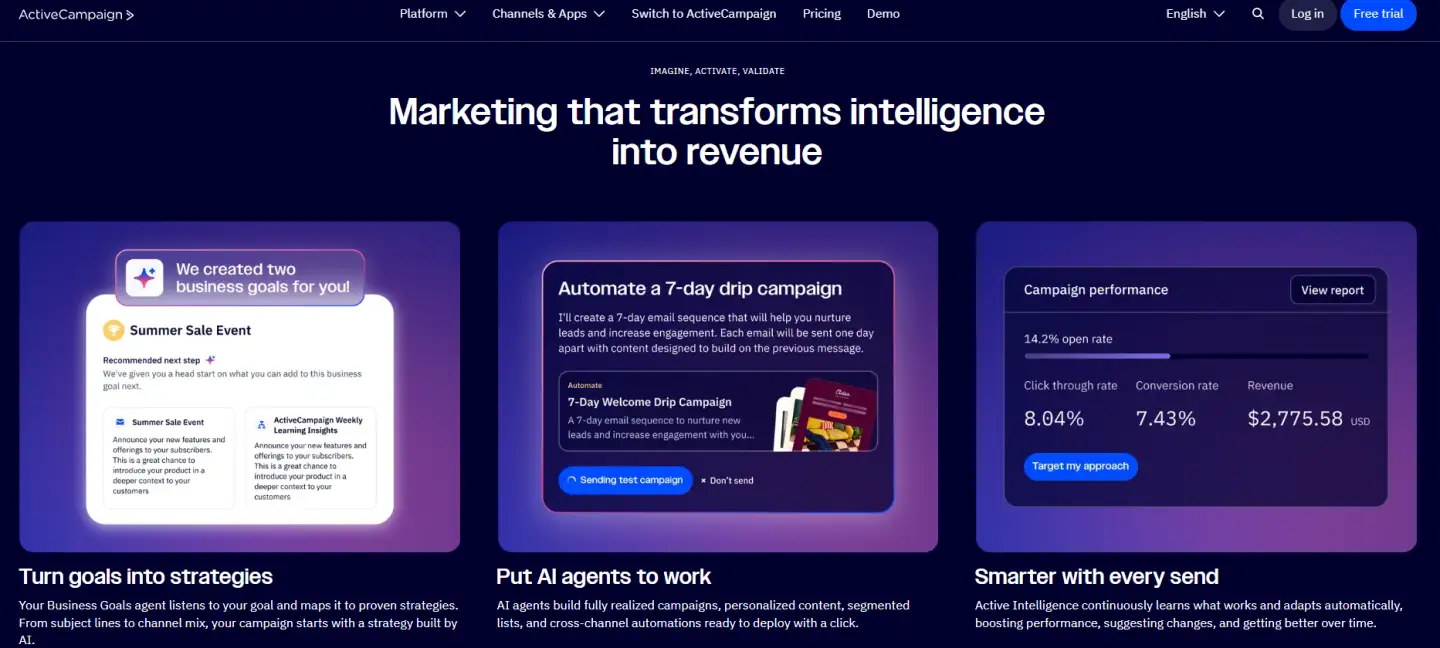
A SaaS company can use it to personalize onboarding, nurture trial users, monitor campaign performance, and surface opportunities within existing customer journeys. Agencies and B2B teams can benefit by reducing the manual effort required to manage multiple campaigns and automations while still keeping human oversight over strategy, messaging, audiences, offers, and campaign quality.
Where It May Not Be Necessary Yet
Simple weekly newsletters, very small contact lists, or teams with limited campaign history and poor data quality may not see immediate value from more advanced autonomous capabilities. Basic email and automation tools can still be sufficient when marketing needs are straightforward.
In those cases, the priority should be getting the fundamentals right first: building a clean email list, sending consistent campaigns, understanding engagement patterns, connecting reliable customer data, and creating offers that people actually want. Autonomous marketing becomes more valuable when there is enough account history, campaign activity, customer context, and business direction for AI to work with. Without that foundation, advanced AI capabilities may add complexity before they create meaningful value.
ActiveCampaign Pros and Considerations
Pros:
Comprehensive marketing automation, customer journey, and CRM capabilities
Active Intelligence 3.0: Wavelength for proactive, account-aware AI assistance
Strong integration ecosystem for connecting marketing and customer data
AI capabilities for proactive drafts, automation insights, content performance, account context, and external intelligence
Considerations:
Advanced automations and AI capabilities can require time to learn and configure effectively
Pricing depends on plan, contact volume, and selected capabilities
Best results depend on reliable data, useful account context, and ongoing human review
Not every Active Intelligence capability may be necessary or available for every account immediately
Who Should Consider ActiveCampaign?
ActiveCampaign is especially relevant for businesses that already have a growing contact list, multiple customer segments, recurring campaigns, or lifecycle journeys that are becoming increasingly difficult to manage manually. It is a stronger fit when email marketing, automation, customer data, CRM workflows, and AI-assisted marketing need to work together within the same system.
Who Might Prefer a Simpler Tool?
If your entire email strategy is one occasional newsletter per month, you may not need a full automation and AI-powered marketing platform yet. The value of ActiveCampaign becomes clearer when you are managing behavior-based journeys, lead nurturing sequences, ecommerce follow-ups, sales handoffs, recurring campaigns, or more complex lifecycle marketing that benefits from deeper account context and proactive assistance.
Key Takeaways
Traditional automation executes predefined rules; autonomous marketing adds proactive, context-aware AI assistance.
AI can reduce manual preparation and monitoring, but it does not remove the need for human oversight and approval.
Data quality, account context, and clear business goals remain critical.
ActiveCampaign’s Active Intelligence 3.0: Wavelength provides a practical path toward more proactive and account-aware marketing.
Start with reliable automation foundations, then expand AI usage where it creates clear value.
Human strategy, judgment, and brand direction remain central to the best outcomes.
Final Verdict
Traditional marketing automation remains valuable because it reliably executes predefined workflows, triggers, and customer journeys. Autonomous marketing extends that foundation by adding AI that can understand account context, monitor marketing activity, surface insights, prepare campaign ideas, and proactively recommend next steps. For teams managing increasingly complex marketing operations, this shifts AI from a tool that simply responds to prompts toward a more active assistant that works alongside the marketer while leaving strategy and final decisions under human control.
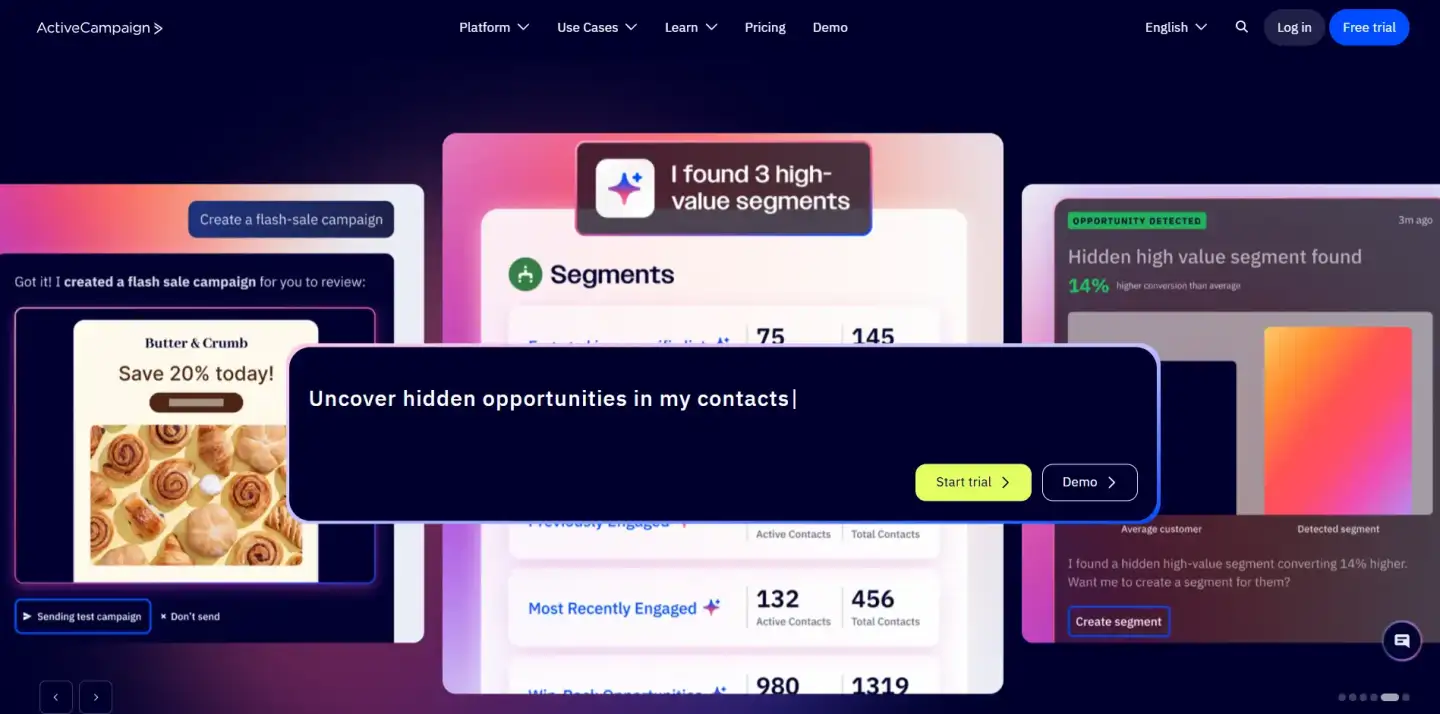
ActiveCampaign’s Active Intelligence 3.0: Wavelength makes this shift easier to understand because it adds a proactive, account-aware AI layer on top of an established marketing automation and customer journey platform. It does not replace strategy, brand direction, or human judgment, but it can use account history, performance context, and relevant signals to help marketers prepare campaigns, surface useful insights, identify areas that need attention, and decide what to review next.
If you want to see how ActiveCampaign is approaching autonomous marketing through Active Intelligence 3.0: Wavelength, you can explore the platform here.
FAQ
It uses AI to help plan, create, optimize, and adapt campaigns based on goals and data, going beyond fixed-rule automation.
Automation follows your exact rules. Autonomous systems add AI layers for suggestions, predictions, and content support.
No. It handles routine tasks and offers insights, but strategy, creativity, and final decisions stay with people.
It combines strong traditional automation with Active Intelligence for AI-assisted capabilities, positioning it in the autonomous direction.
ActiveCampaign’s AI system that powers features like campaign building from prompts, predictive sending, insights, and more.
Yes, particularly for reducing time on repetitive tasks, though benefits depend on list size and goals.
Welcome flows, abandoned cart recovery, lead nurturing, re-engagement, and post-purchase sequences.