


Product teams love Amplitude for its powerful event tracking, cohort analysis, and behavioral insights. But rising pricing, complex setups, and limited visual data often push teams to seek better options. Whether you need affordable session recordings, no-code attribution, or self-hosted privacy controls, the right Amplitude alternative can deliver deeper user understanding while fitting your budget and workflow.
In this guide, we review the top seven Amplitude alternatives that top-performing teams actually use in 2026. Each tool addresses key gaps in traditional product analytics—from visual heatmaps that reveal why users drop off to AI-powered attribution that connects marketing spend to revenue. You’ll get practical pros, cons, use cases, and implementation tips to help you choose the perfect fit.
Why Teams Are Switching from Amplitude in 2026
Amplitude excels at quantitative event data, but many growing SaaS, e-commerce, and mobile teams now demand more. Common pain points include:
Sticker shock on usage-based pricing as event volumes scale.
Lack of visual context—you see what happened but not how users struggled.
Privacy and compliance pressure post-GDPR/CCPA updates.
Slow setup requiring heavy developer resources.
The tools below solve these issues with session replays, heatmaps, cookieless tracking, and revenue-focused dashboards. Most offer generous free trials and faster ROI through quicker insights.
Top 7 Amplitude Alternatives Compared
Here are the standout Amplitude alternatives, ranked by how effectively they complement or replace core Amplitude capabilities like user journeys, funnels, and retention analysis.
1. Hotjar – Best for Visual Behavior + Feedback Loops
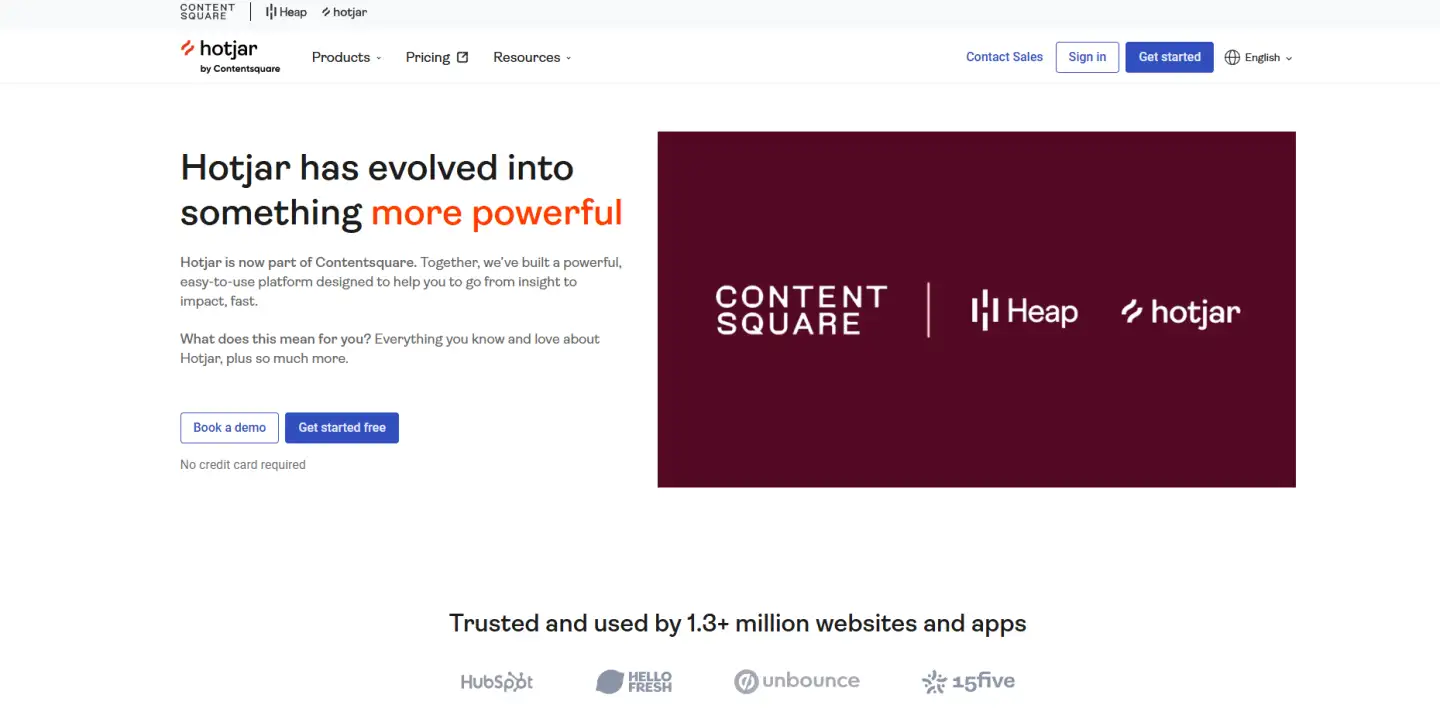
Hotjar has evolved into a full experience intelligence platform (especially after its Contentsquare integration), making it one of the most popular Amplitude alternatives for teams craving visual proof.
Key features:
Advanced heatmaps showing clicks, scrolls, and movement
Session recordings with AI-generated summaries
Funnels that highlight device-specific drop-offs
AI-powered surveys and user tests with sentiment analysis
Upcoming product analytics layer inherited from Heap
Hotjar shines when you need to connect what users do (behavior) with why they do it (feedback). Unlike Amplitude’s event-only view, Hotjar’s recordings let you watch real frustration moments—perfect for UX teams fixing onboarding friction.
Best for: E-commerce stores and SaaS landing pages.
Pricing: Flexible plans with a free tier; check current pricing for scaling needs.
Why it beats Amplitude for many: Faster setup and immediate visual wins without custom event coding.
2. Mouseflow – Best for Friction Detection and Conversion Optimization
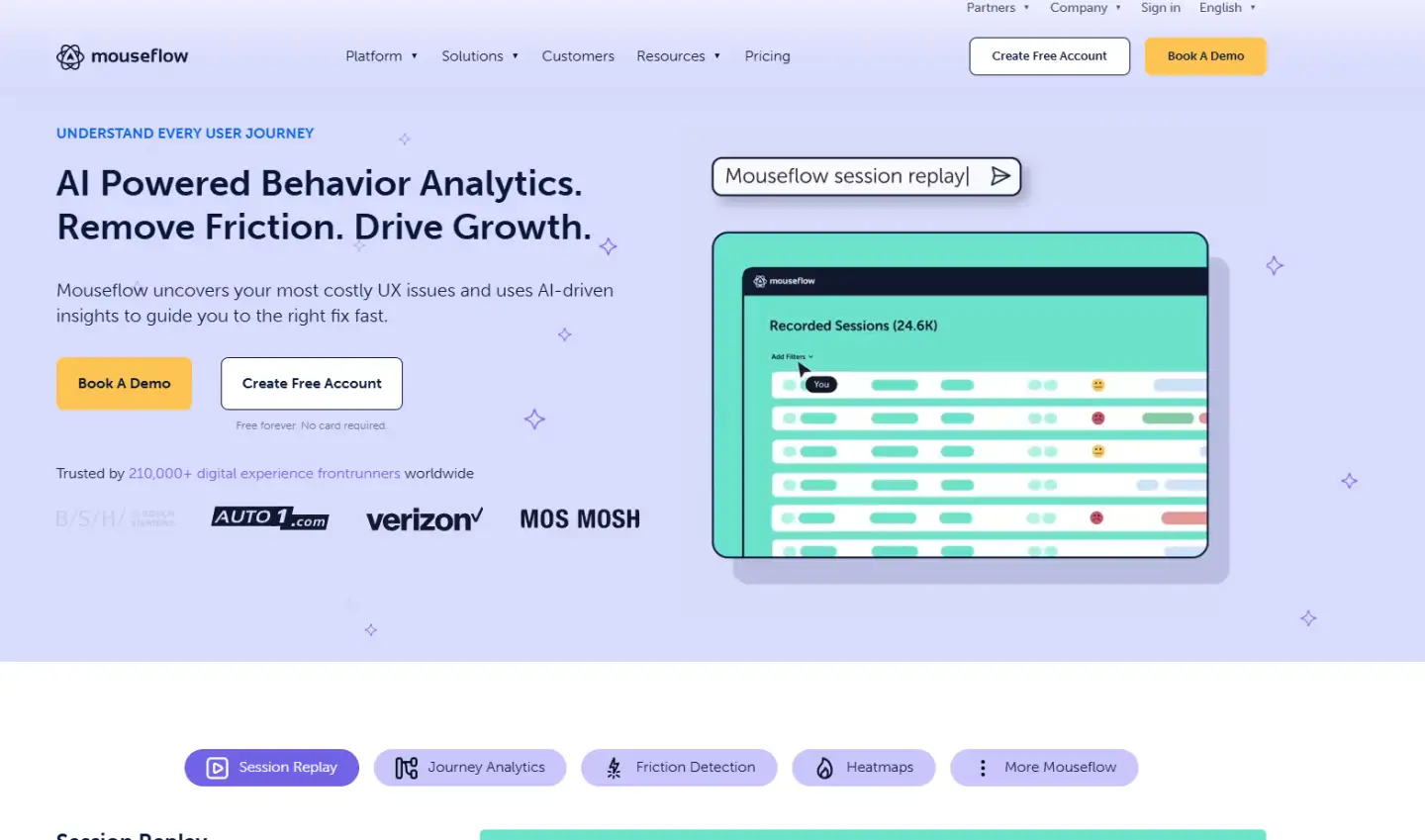
Mouseflow delivers deep behavioral analytics through session replay and AI-driven insights, positioning it as a strong Amplitude alternative for conversion-focused teams.
Standout capabilities:
Mina AI that automatically analyzes sessions and spots missed opportunities
Smart heatmaps with attention and friction scoring
Journey analytics and conversion funnels with revenue impact metrics
Form analytics that pinpoint exact field drop-offs
Automatic user satisfaction scoring
Product managers use Mouseflow to detect “friction points” Amplitude might miss—such as rage clicks or hesitation zones—then fix them before A/B testing. Real results include 78% conversion lifts for some e-commerce brands.
Best for: Mid-market e-commerce and SaaS teams optimizing checkout flows.
Pricing: 14-day full-feature trial; scalable plans.
Pro tip: Combine Mouseflow’s friction scores with Amplitude-style cohort data for hybrid analysis.
3. Crazy Egg – Best for Quick Visual Heatmaps and A/B Testing
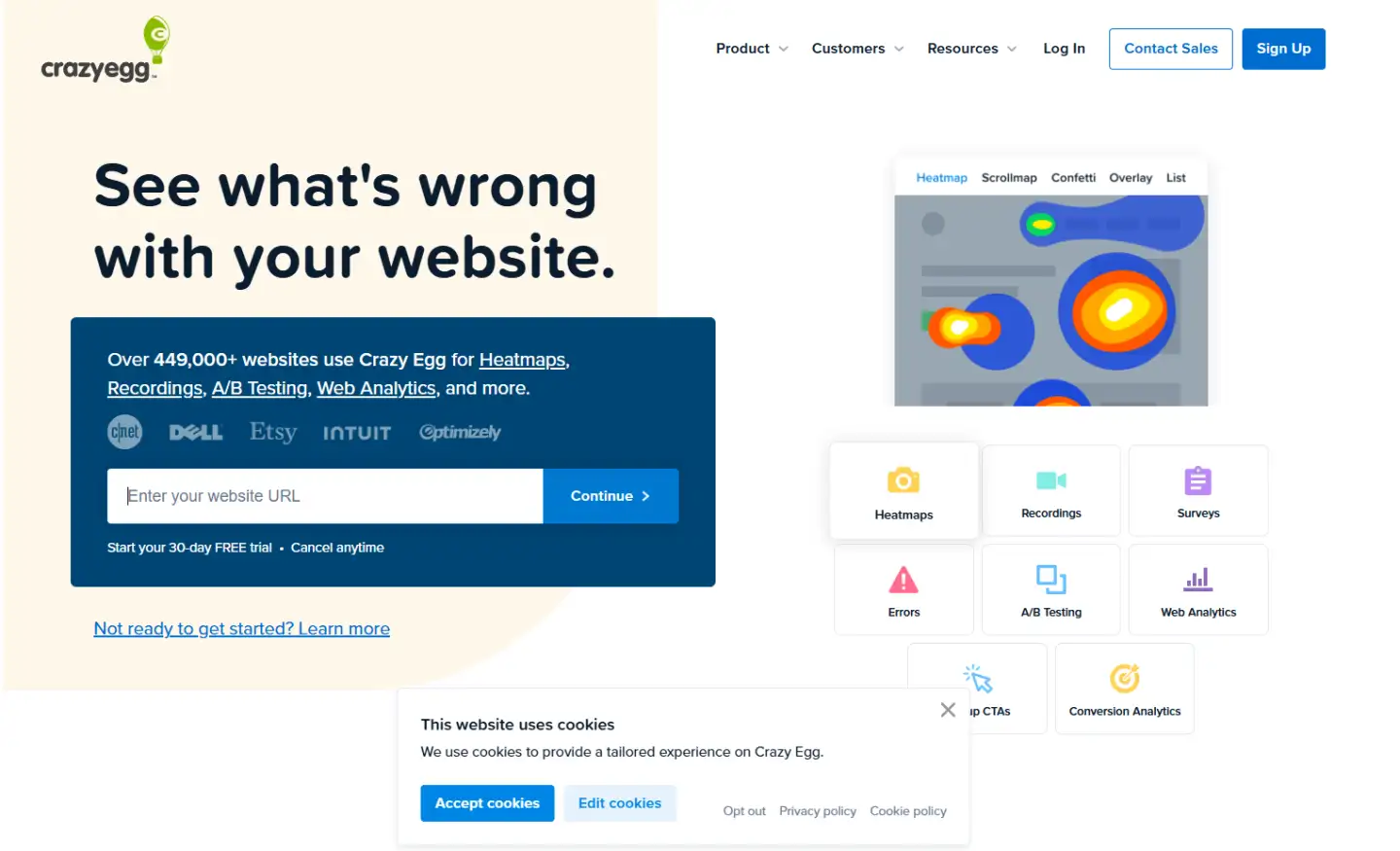
Crazy Egg remains a favorite lightweight Amplitude alternative for marketers who want instant visual data without a steep learning curve.
Core tools:
Heatmaps, scroll maps, and confetti maps
Session recordings of real visitor journeys
Built-in A/B testing with zero coding
AI-automated web analytics dashboard
Targeted surveys and popup CTAs
What sets Crazy Egg apart is its simplicity: install one snippet and start seeing where users click and scroll within minutes. It’s ideal when Amplitude feels overkill for basic behavior insights.
Best for: Small-to-medium marketing teams and agencies running frequent tests.
Pricing: Straightforward plans with free sign-up.
Actionable advantage: Exportable data tables and real-time traffic reports make stakeholder presentations effortless.
4. Lucky Orange – Best for Real-Time Session Insights and Live Engagement
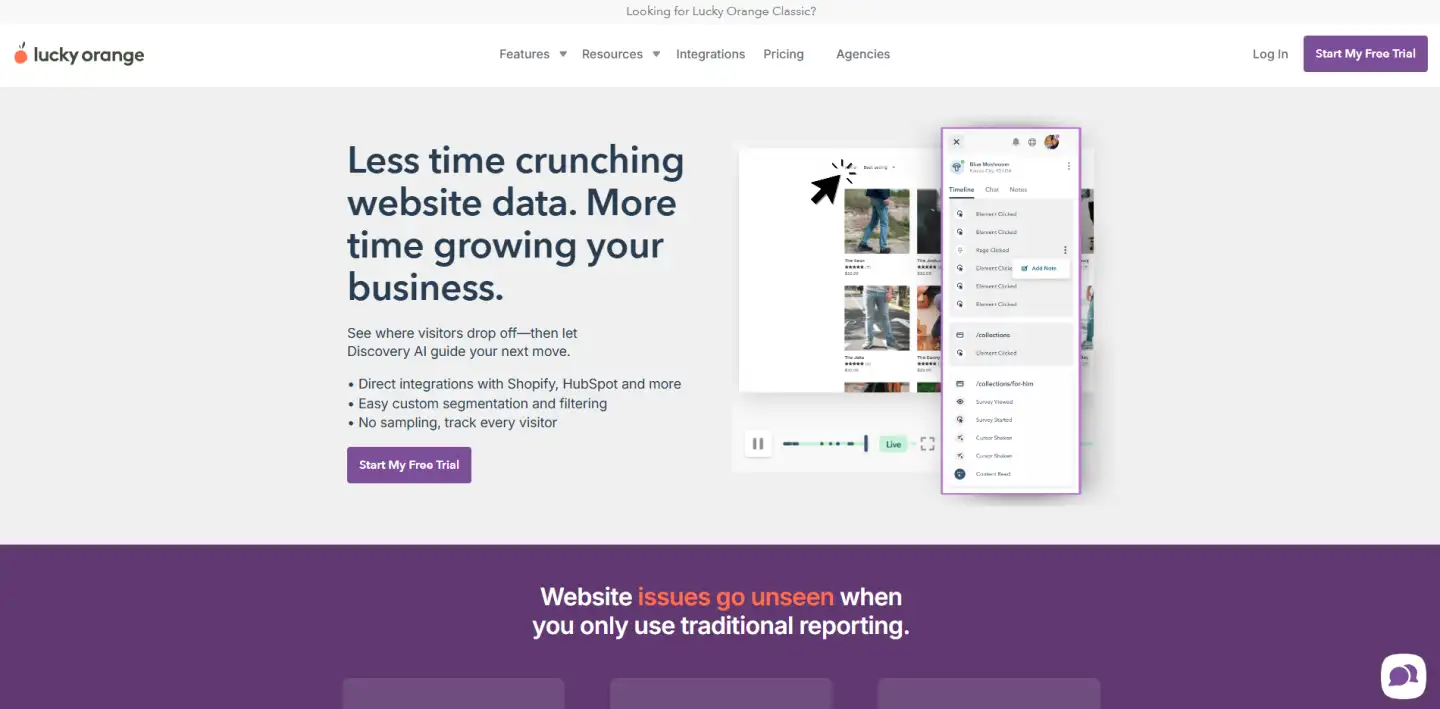
Lucky Orange combines powerful recordings with an AI assistant, making it one of the most user-friendly Amplitude alternatives for teams that value speed and visuals.
Highlight features:
Click, scroll, and move heatmaps
Full session recordings with bug and UX blocker detection
AI-powered Lucky Orange Discovery that answers natural-language questions about your data
Privacy-first tracking (fully GDPR/CCPA compliant)
Lucky Orange turns invisible visitor behavior into clear, visual proof. Teams report spotting onboarding issues that traditional analytics completely missed.
Best for: Growing websites and e-commerce brands needing fast CRO wins.
Pricing: Competitive plans with easy implementation (one line of code).
Unique edge: The AI assistant feels like having a dedicated analyst on call 24/7.
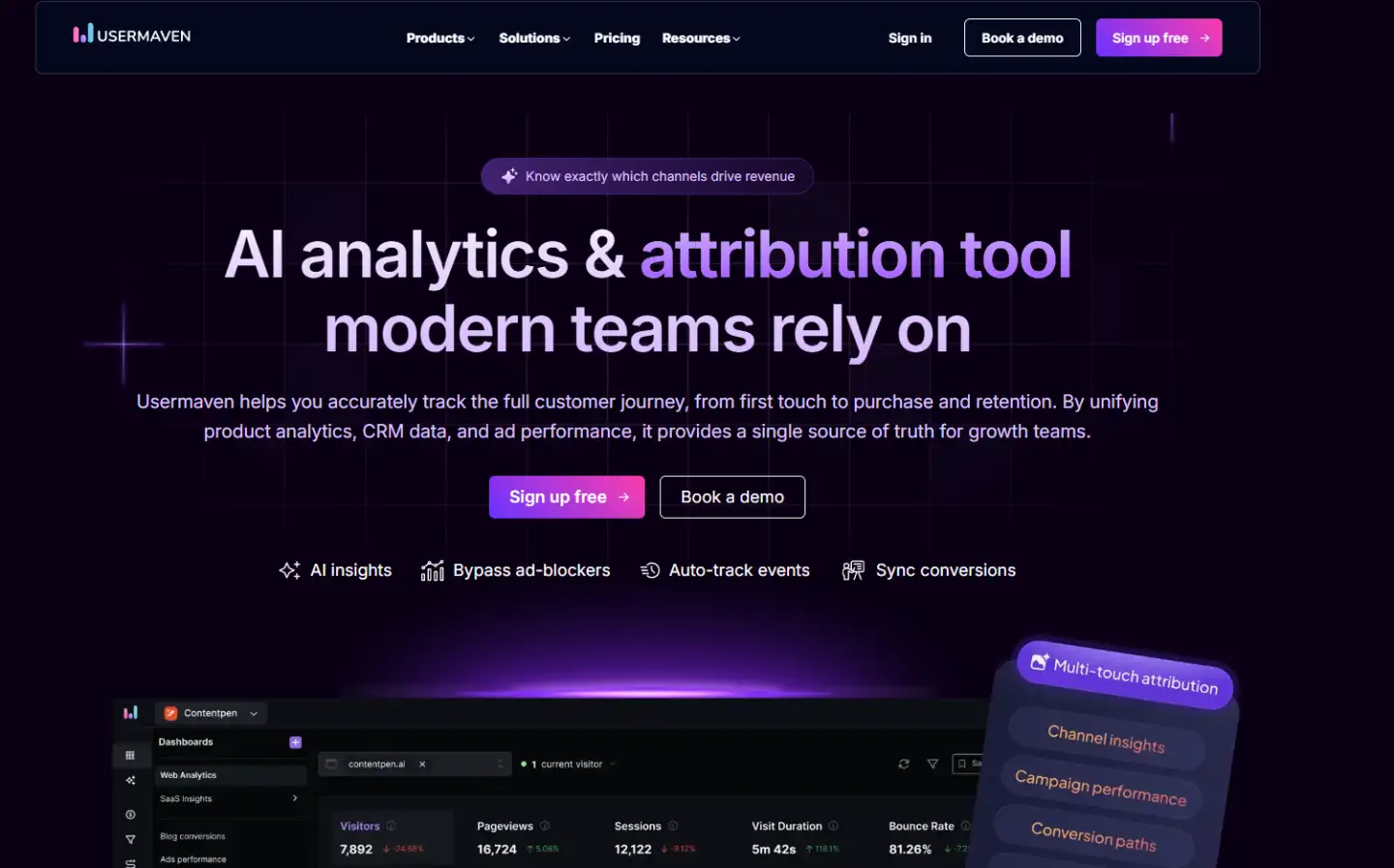
5. Usermaven – Best No-Code Product Analytics with AI Attribution
Usermaven stands out as a true next-generation Amplitude alternative built for privacy-conscious growth teams.
Powerful capabilities:
Auto-track every click and feature interaction (no developers needed)
Seven AI-powered multi-touch attribution models
Cohort analysis, retention tracking, and churn prediction
Cookieless tracking that captures 99% of users
Maven AI for instant insights and recommendations
Usermaven eliminates the “25-40% data loss” common with ad blockers while keeping everything GDPR/CCPA compliant and EU-hosted. It’s the go-to choice when you want Amplitude-level depth without the complexity or cost.
Best for: SaaS product and marketing teams tired of fragmented tools.
Pricing: Positioned as more affordable than Amplitude; generous free trial.
Why switch: 5-minute no-code setup plus CRM sync gives you a single source of truth for the entire customer journey.
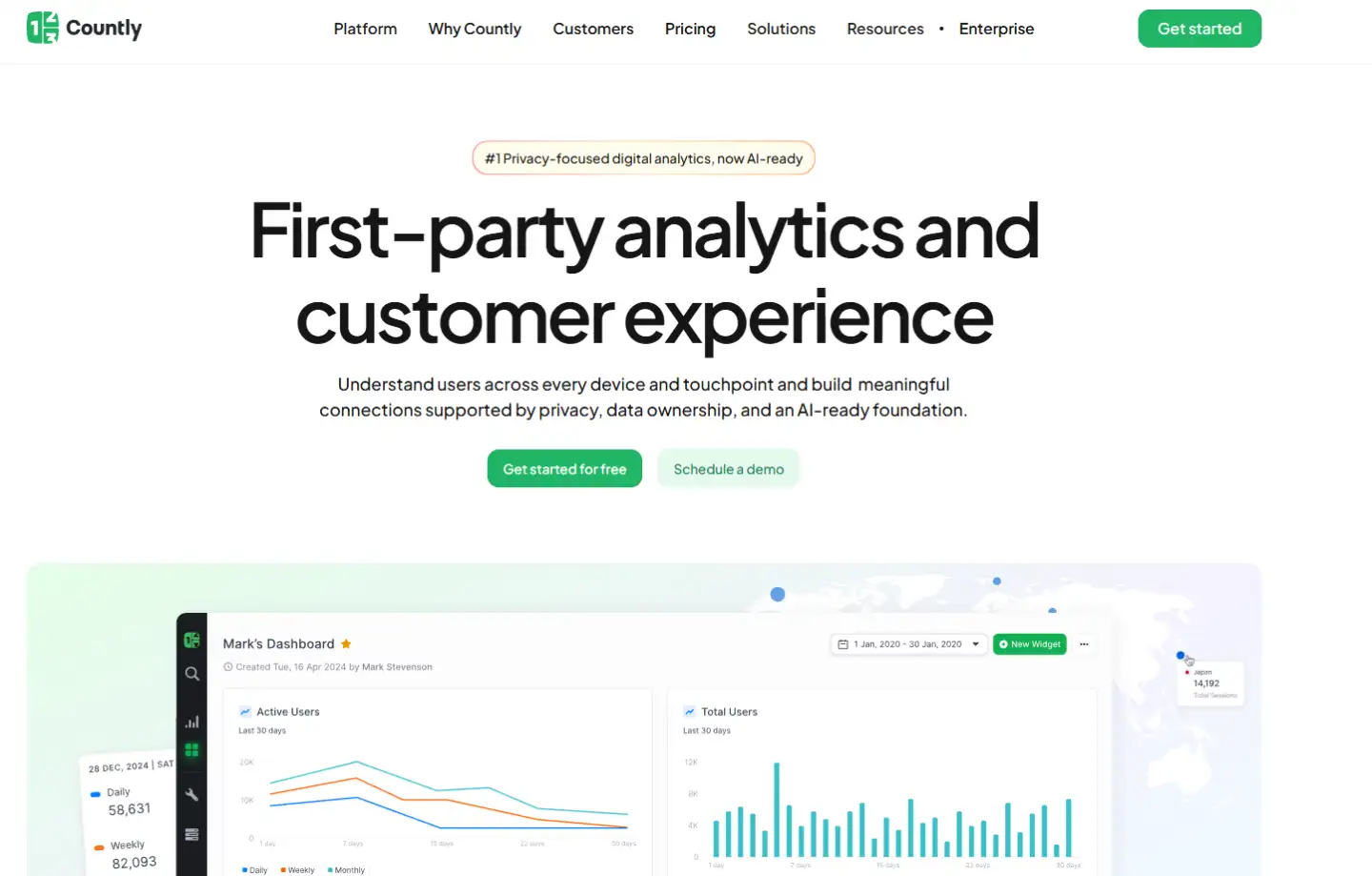
6. Countly – Best Self-Hosted and Privacy-First Analytics
Countly delivers enterprise-grade product analytics with full data ownership, making it the top Amplitude alternative for teams prioritizing sovereignty.
Key strengths:
Real-time event analytics and user profiles across web, mobile, and desktop
Funnel analysis, A/B testing, and retention tools
In-app messaging and push notifications for instant engagement
Self-hosted or private-cloud options
First-party data focus with no third-party dependencies
Countly’s community edition is completely free for smaller teams, while enterprise plans scale seamlessly. It’s perfect for regulated industries or companies wary of cloud-only analytics vendors.
Best for: Mobile-first apps and privacy-sensitive organizations.
Pricing: Free community edition; enterprise plans for advanced features.
Standout benefit: Full control over your data pipeline—something Amplitude simply cannot match.
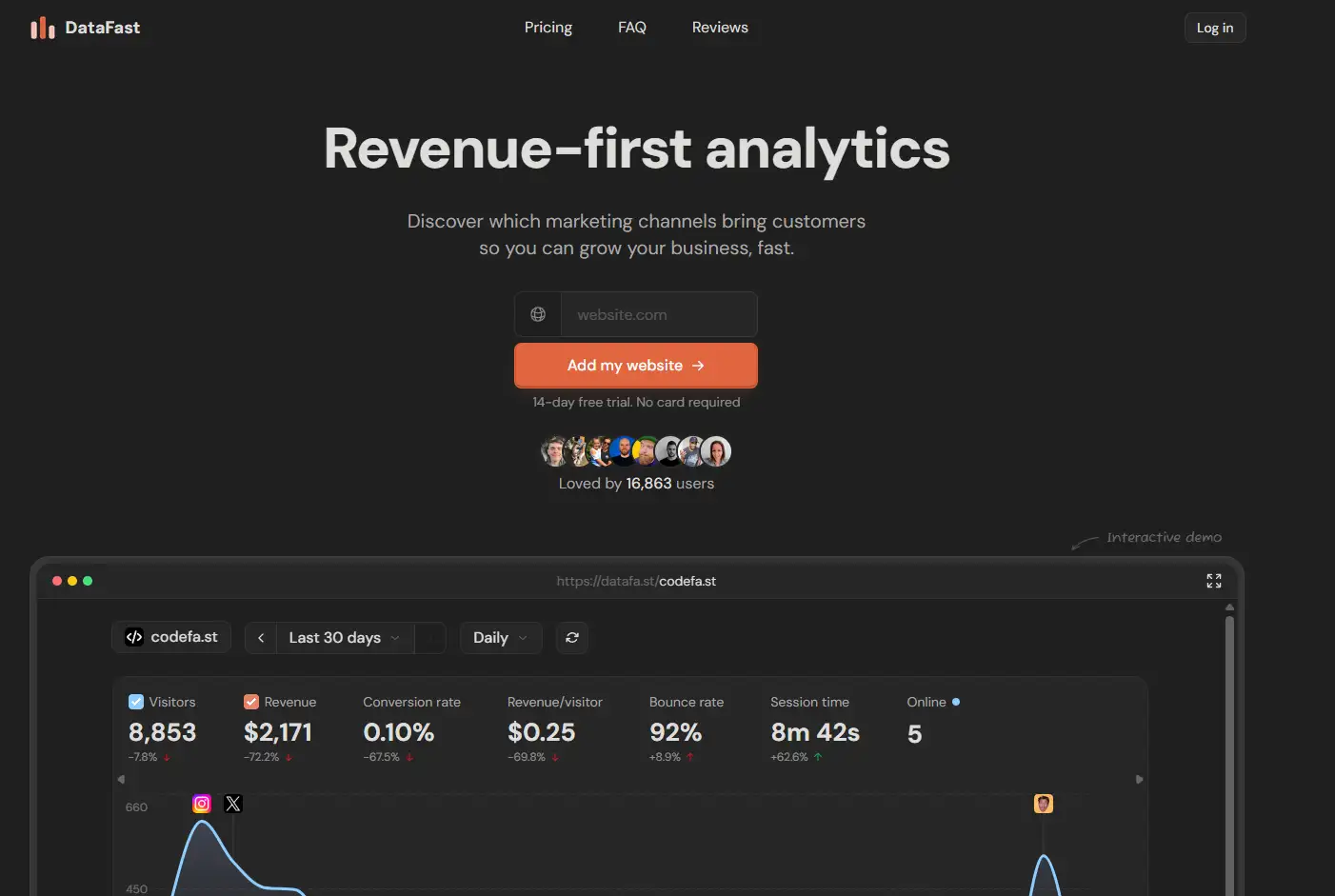
7. DataFast – Best Revenue-Focused Analytics for Founders
DataFast closes our list as the simplest, most actionable Amplitude alternative built specifically for revenue attribution.
Game-changing features:
Revenue per visitor and marketing channel attribution
Real-time visitor intelligence with live buyer signals
No-code integrations for Shopify, WordPress, Webflow, and more
Custom goals, funnels, and high-LTV customer segments
3–5+ years of data retention depending on plan
Instead of vanity metrics, DataFast shows exactly which channels drive paying customers. Founders report doubling revenue in 30 days by fixing onboarding blind spots.
Best for: Solo founders, startups, and e-commerce brands.
Pricing: Traffic-based Starter and Growth plans with generous retention.
Why it works: Straightforward dashboards that non-technical teams actually use daily.
Key Takeaways
Visual tools first: Hotjar, Mouseflow, Crazy Egg, and Lucky Orange excel at heatmaps and recordings when you need to see user struggles.
Analytics depth: Usermaven and Countly deliver Amplitude-style event tracking with better privacy and no-code options.
Revenue focus: DataFast proves which marketing efforts actually pay off.
Most teams win with a hybrid approach—pair one visual tool with one analytics platform.
Start small: Every option offers free trials or community editions, so test two tools this week.
Ready to Move Beyond Amplitude?
The best Amplitude alternative depends on your biggest pain point—cost, visuals, privacy, or revenue clarity. Start by identifying your top three needs (e.g., session replay, attribution, self-hosting), then trial the matching tools from this list.
Whichever you choose, the goal remains the same: turn user behavior into faster, smarter product decisions. The teams winning in 2026 aren’t the ones with the most data—they’re the ones with the right insights delivered at the right time.
Ready to upgrade your analytics stack? Pick one tool from this guide, install it today, and watch your team’s understanding of users transform within the first week. Your next big product breakthrough is waiting in the data you’re already collecting—you just need the right lens to see it.
FAQ
Countly’s community edition and Datafa.st’s Starter plan offer powerful free or low-cost entry points with real product analytics capabilities.
Hotjar excels at qualitative behavior data and feedback but works best alongside a lightweight analytics tool. Many teams use it to add visual context to Amplitude-style quantitative data.
Usermaven (cookieless + EU-hosted) and Countly (self-hosted) lead here, both prioritizing data ownership and compliance.
Most (especially Usermaven, Lucky Orange, and Datafa.st) offer no-code installation. Only advanced custom events might need light dev support.
Export historical data where possible, then run parallel tracking for 30 days. Tools like Usermaven and Datafa.st provide migration guides and support.